
By Halcyon Machinery · Factory-direct from our Xiamen production base · Published and updated
Direct answer
Buy a light gauge steel (LGS / CFS) framing machine if you build steel-framed houses, modular buildings, wall panels or trusses: it turns a design file into numbered, punched and cut members for one building. Buy a stud and track roll forming machine if you sell drywall partition and ceiling profiles: it makes standard C-studs and U-tracks in stock lengths at low cost per metre. The two machines look similar but serve different products, customers and approval routes.
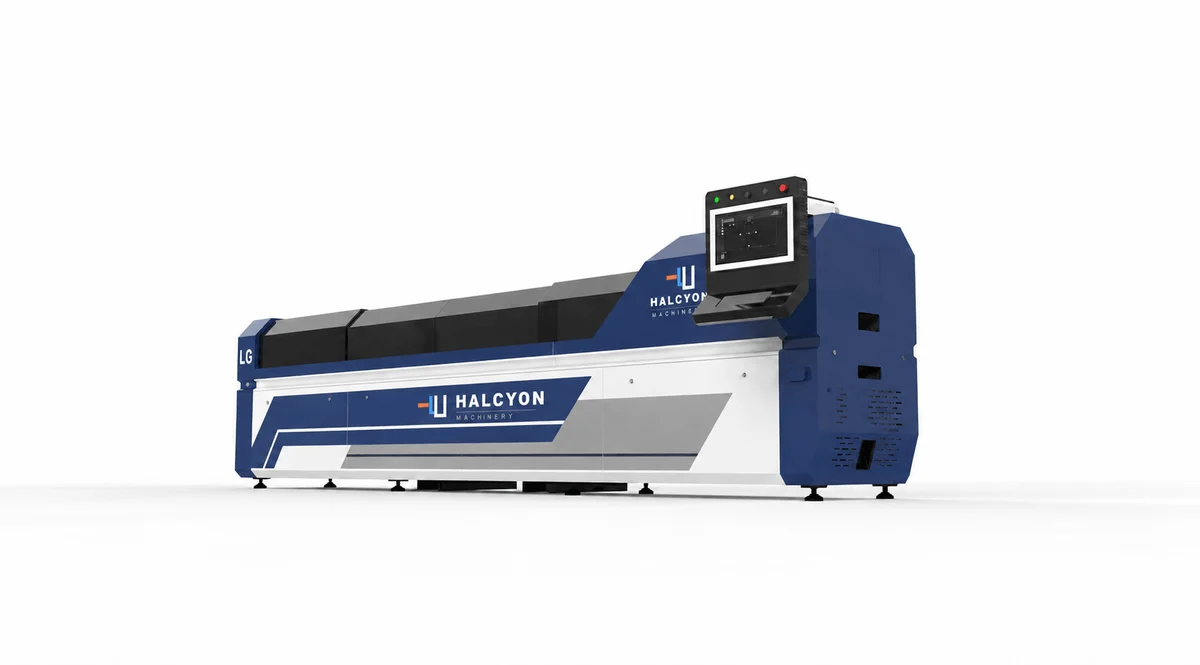
Two machines for two different products
A light gauge steel framing machine is a member-production system. Framing software exports the member list of a house or panel; the machine forms the C-section, punches service holes, dimples and notches, prints the member ID and cuts each piece to its exact length. The output is a kit of parts that is assembled directly into wall panels, floor joists or roof trusses.
A stud and track roll forming machine makes the non-load-bearing C-studs and U-tracks used with plasterboard. The operator sets a profile and cut length, and the line produces bundles of identical pieces for contractors and building-material distributors. Speed per metre and changeover between the stud and the track matter more than member-by-member data.
Side-by-side comparison
| Point | Light gauge steel framing machine (LGS / CFS) | Stud and track roll forming machine (drywall) |
|---|---|---|
| What it makes | Numbered wall, floor and roof framing members cut to length for one building | Drywall partition C-studs and U-tracks, usually in stock lengths |
| What drives it | A member file from framing design software (Our Xiamen production base lists CSV input for its HLG-2025) | A profile setting and cut-length list entered at the PLC |
| Inline operations | Service holes, dimples, notches, ID marking and cut-to-member in one pass | Forming and cut-off; punching only when the drawing needs it |
| Catalogue section example | HLG-2025S-89: 89 × 41 × 10 mm, lip 7–12 mm (140 mm is a separate S-140 variant) | HCU-200 C/U: width 75–220 mm, height 32–51 mm, C lip 8–15 mm |
| Catalogue thickness example | 0.75–1.2 mm (HLG-2025Pro-89: 0.75–1.6 mm) | 0.8–1.6 mm coil |
| Speed reference | 48 m/min documented high-speed reference; real output depends on holes and member length | Confirmed per configuration and profile |
| Typical buyer | LGS house and modular builders, wall-panel and truss fabricators | Drywall profile producers and building-material distributors |
| Building approval | Structural design stays with the project engineer | Fire and acoustic performance come from the certified wall system |
Catalogue figures: HLG-2025 and HCU-200 published data, checked 28 September–4 October 2026. The range for your order is written into our quotation.
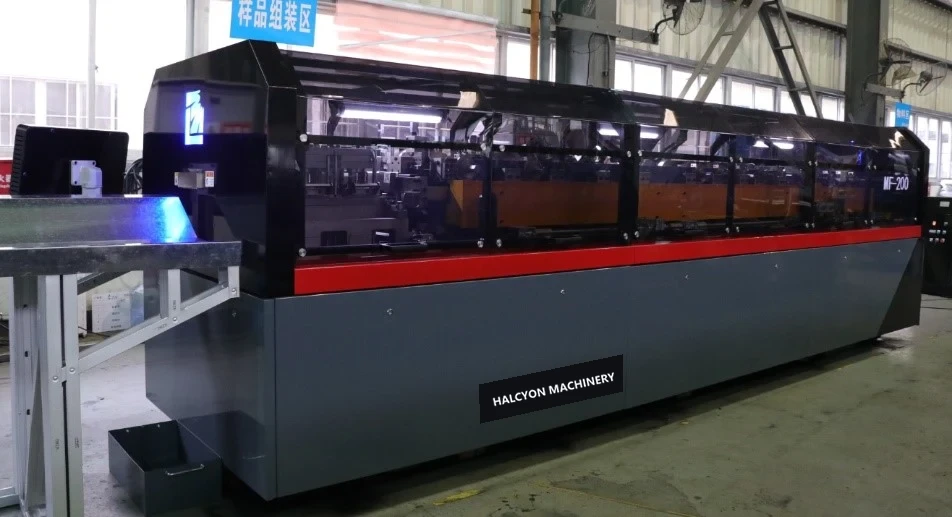
Which one should you buy?
- Choose an LGS framing line when you sell finished steel-framed buildings, wall panels or trusses, when every member is different, and when your design team already works in framing software. See the HLG-2025 fixed-profile variants.
- Choose a stud and track line when you supply plasterboard partitions and ceilings, sell profiles by the bundle, and need the lowest cost per metre on a few standard sizes. Check the stud and track buyer checklist.
- Consider a multi-width line such as the HSK-2000 when web widths change often, and the wall assembly station when you want finished panels instead of loose members.
- Some buyers need both: a framing line for structural members and a separate stud and track line for interior partitions. One shared line only makes sense when the approved sections and production schedule allow it.
Not sure which line fits your project?
Send your member schedule or stud and track drawings, steel thickness and target output. Our engineers at the Xiamen production base reply with a matched configuration and written quotation within 24 hours.
What affects the price of each machine?
We quote each line by configuration. For both types the price depends on the section sizes, steel thickness, punching and cut-off method, line speed, control-system and component brands, decoiler and outfeed equipment, and delivery terms (FOB or CIF). A framing line adds the software workflow, punching and notching tools and member marking. A stud and track line changes mainly with the number of sections (stud only, track only or both) and whether they share one line. See configuration levels and price factors.
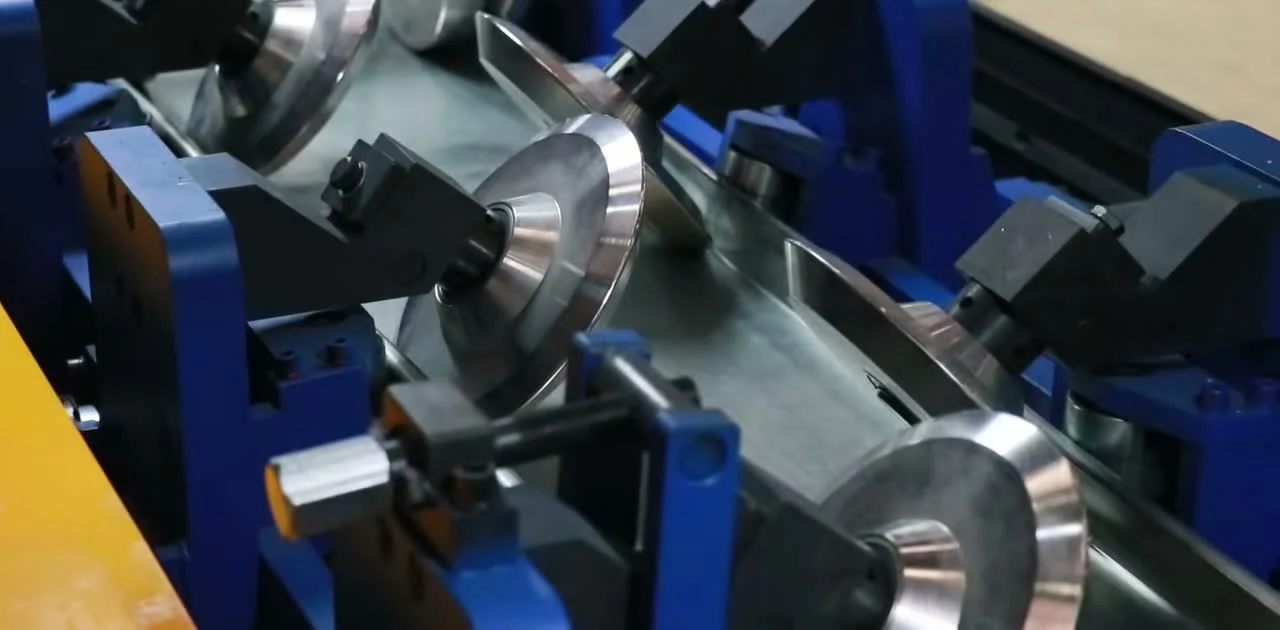
Watch: a drywall-system profile being roll formed
This Halcyon Short shows how a hat-shaped ceiling channel is formed, a profile from the same drywall-system family as studs and tracks.
Questions buyers ask
What is the difference between a light gauge steel framing machine and a stud and track machine?
A light gauge steel framing machine produces engineered, numbered wall, floor and roof members for one building, driven by a design file, with punching, marking and cut-to-length in one pass. A stud and track machine produces standard drywall C-studs and U-tracks, usually in stock lengths, for partitions and ceilings.
Can a stud and track machine make load-bearing steel framing?
Only if your approved member drawings, steel thickness and hole pattern fall inside its tooling. Most drywall lines have no file-driven punching or member marking. Send the drawings and we confirm in writing which members each line covers.
Can one LGS framing machine make 89 mm and 140 mm studs?
Not a fixed-profile line. In the HLG-2025 catalogue, S-89 and S-140 are separate variants with their own roll sets. If your web widths change often, compare a multi-width line such as the HSK-2000.
Which machine costs more?
We quote both by configuration, not from a price list. A framing line usually adds software, punching, notching and marking tools, so its scope is larger than a basic stud and track line. Our written quotation lists every module so you can compare like with like.
What should I send to get a quotation?
Send the profile or member drawings, steel grade and thickness range, hole and notch schedule, cut lengths, target output, power supply and destination country. We reply within 24 hours.
What to send for a quotation
For a framing line: a sample member file, member drawings, steel grade and thickness, hole and notch schedule and target members per shift. For a stud and track line: the stud and track drawings, thickness range, punching layout, cut lengths and target output. Add your power supply and destination country. See reference projects from our Xiamen production base.
Not sure which line fits your project?
Send your member schedule or stud and track drawings, steel thickness and target output. Our engineers at the Xiamen production base reply with a matched configuration and written quotation within 24 hours.
Related guides
CFS framing line · HLG-2025 framing machine · stud and track roll forming machine · framing machine CSV file check · purlin vs light steel keel machine · light steel keel machine range
Sources: HLG-2025, HCU-200 and HCU-300 product pages (catalogue references, images credited above) and Halcyon quotation practice, reviewed 7 October 2026. Structural and wall-system approvals remain with the project designer and local authority.