
Light Steel Wall Assembly Line: Check the Fixtures and Fastening Plan
A wall assembly station positions and joins pre-formed members. It is not itself a coil-fed stud and track roll forming line. Define both scopes separately before requesting a proposal.
Direct buyer answer
Start from the completed panel drawing and the joint schedule. Mark the datum edges, stud and track locations, openings, fastening positions, allowable panel geometry and inspection points. State whether the project requires only assembly equipment or also upstream profile forming. Halcyon can coordinate a factory-team configuration review, but an actual machine layout and performance claim require a specific proposal and trial.
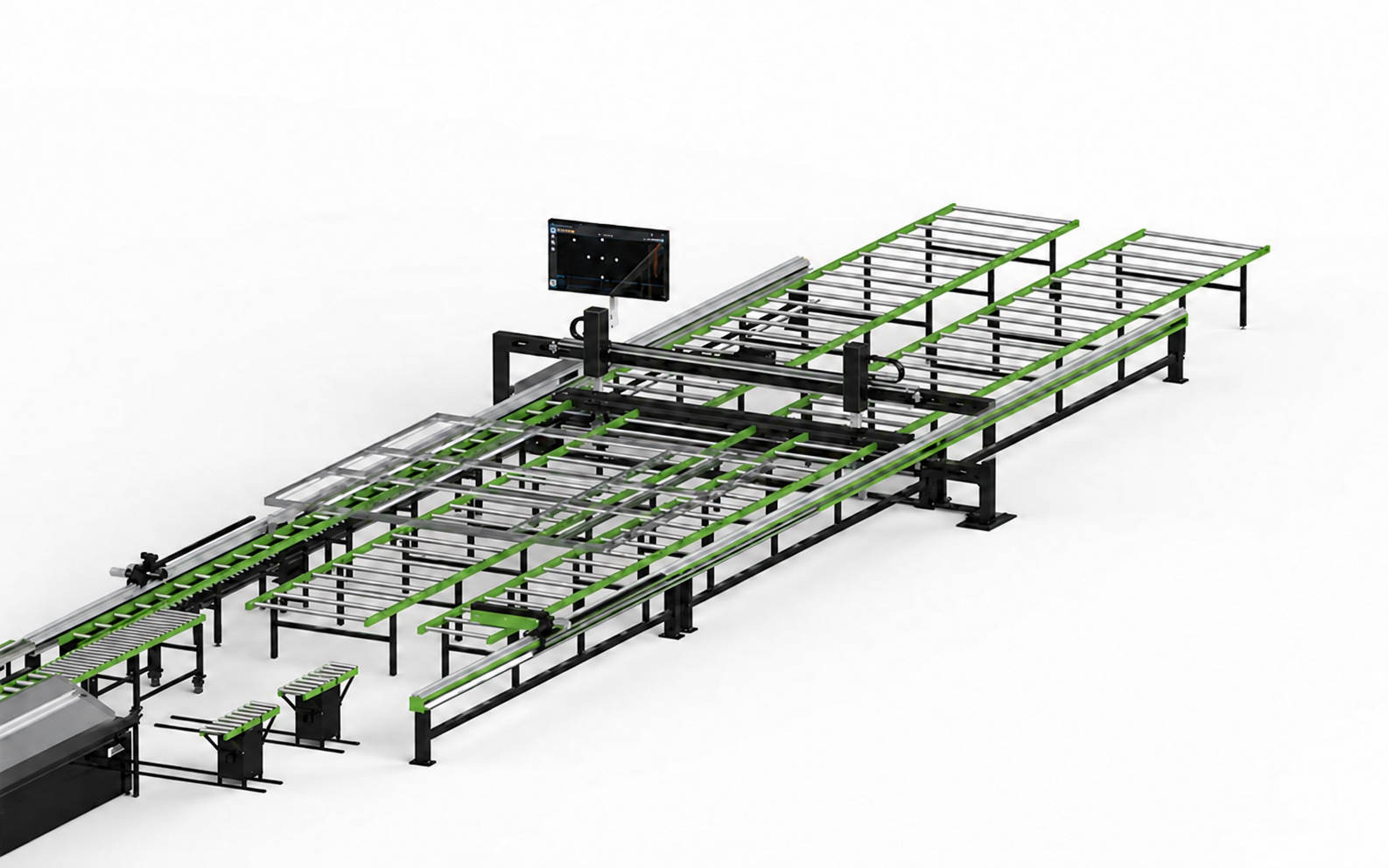
Where does the published HWF-4000 reference fit?
HWF-4000 listing describes sorting, positioning, assembly, fastening and transfer of light-gauge framing members. It lists an 89–152 mm keel-web reference and wall-panel assembly sizes from 1.8 × 2.4 m to 5 × 3.6 m. Those are published figures for a named production-base system, not a guaranteed range for every Halcyon layout or a statement that the upstream roll former is included.
If your project needs an integrated forming-to-assembly workflow, compare the HWF-4000 modular production-line reference. Ask the factory to identify the offered stations and verify the member handoff, fixture limits, fastening schedule and panel trial against your own drawings before requesting a final quotation.
Keep the upstream and assembly scopes separate
A stud or track line forms individual members from coil. The wall assembly station receives identified members and positions them into a panel or frame before fastening. The interface between them may include member length, hole/notch layout, labeling, buffers and handling. Do not infer that the assembly station contains a decoiler, roll stations or a cut-off simply because those modules appear in a general roll forming template.
| Scope | Buyer question | Evidence to request |
|---|---|---|
| Incoming members | Are the pre-formed studs, tracks and connectors made to the right revision? | Member drawings and labeled samples |
| Positioning | Which datum locates the frame and each opening? | Fixture drawing and measurement plan |
| Fastening | Which joints, fasteners and sequence are required? | Approved joint schedule and trial record |
| Handling | How are panels loaded, supported and discharged? | Floor layout and handling demonstration |
| Controls and safety | Which interlocks and operator actions are in scope? | Machine-specific control and safety documents |
What to check in a witnessed assembly trial
Use identified upstream members and the agreed panel drawing. Measure the panel envelope, critical opening locations and joint positions on first-off and later assemblies. Keep a record of fixture adjustments, fastening results, rework and cycle assumptions. Agree the measurement method and acceptance limits before the trial. A demonstration of one panel does not prove repeatable output or building-system strength.
The project engineer and applicable certification route determine structural, fire, acoustic and other system performance. The equipment trial addresses assembly quality against the agreed production drawing; it cannot replace those approvals.
Buyer questions
Is a wall assembly line the same as a light steel framing roll former?
No. The roll former makes individual profiles; the assembly station locates and joins them. Specify each work package and its interfaces.
Can a fixture be selected from panel width alone?
No. The datum scheme, panel geometry, member sections, openings, joint schedule, handling and target output are needed.
What should I send for a proposal?
Send panel and member drawings, steel grade and thickness range, punching or notch layout, fastening schedule, panel sizes, target output, upstream machine details, floor layout and destination requirements.
Review CFS profile forming and light steel keel equipment, then send the panel drawing and fastening schedule.
Source and limits: Halcyon Machinery buyer-review framework, updated 1 October 2026. This page does not claim a tested Halcyon-owned assembly line, guaranteed speed, customer installation or certified wall system. The exact scope follows a production-base proposal and documented trial.