
By Halcyon Machinery · Technical content review · Published · Updated
Direct answer
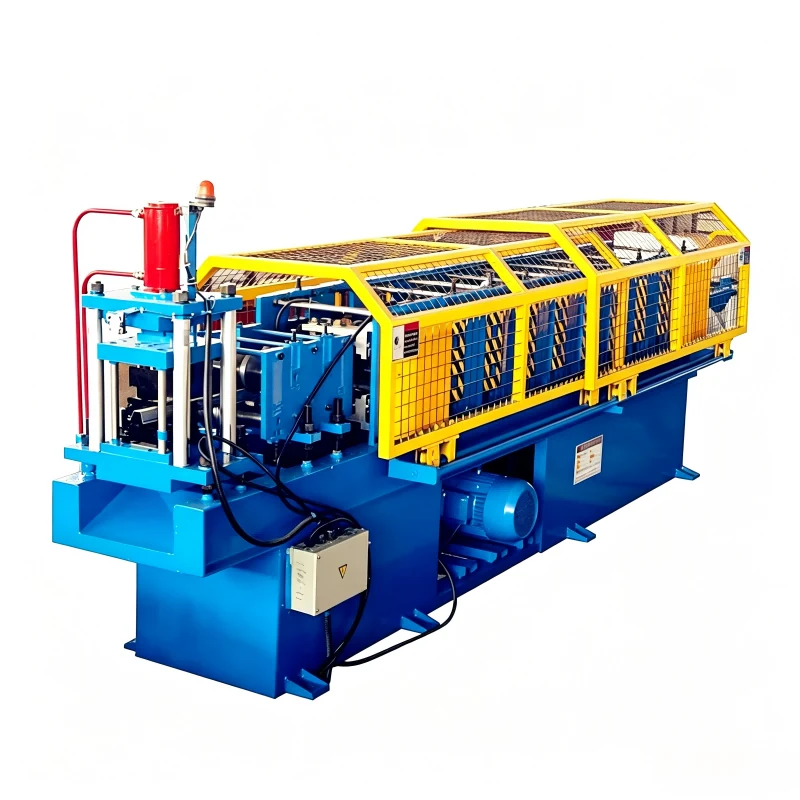
Compare a drywall stud and track machine against the exact sections you sell. Send dimensioned stud and track drawings, steel grade and coating, full thickness range, hole or embossing layouts, cut lengths, required changeover method and accepted pieces per shift. Ask the supplier to identify which profiles share tooling, which need separate tooling, and how first-piece samples will be measured.
Control the profile family
Stud, track, furring and related light-gauge sections may look similar while requiring different lips, ribs, web features or cut methods. Use revision-controlled drawings and require a written compatibility matrix instead of assuming one catalogue name covers every section.
Separate wall framing from ceiling and corner profiles
A shared light-gauge material does not establish shared tooling. Before comparing a stud and track machine quotation, separate these production requirements:
- Partition studs and tracks: approve the stud and mating track drawings together, including lips, ribs, service holes and fit. Check each width and thickness combination in the supplier's written compatibility matrix.
- Concealed ceiling channels: use the ceiling channel and furring machine selection guide to identify the carrying or furring member. Check the section against the actual clips, hangers and mating members; a wall-stud sample does not establish ceiling-system compatibility.
- Exposed ceiling tees: compare the T-grid roll forming machine against the tee section, visible face and connection details. Ask which forming, connector-making and assembly operations are included, then inspect assembled trial joints.
- Wall angles and corner protection: check the angle and corner profile machine against the finished drawing. A plain L angle and a perforated corner bead have different finished features; confirm punching or other required operations separately.
System terminology can overlap: Knauf's Main C-channel description gives an example used in suspended ceilings and wall lining. This is a reference for profile applications, not evidence that a Halcyon configuration produces that proprietary system. Request order-specific tooling confirmation and trial parts for every drawing.
Match punching and cutting to the finished part
List service holes, slots, embossing, marking and cut-end requirements for each profile. Confirm the sequence of these operations and the support used around punching and cutting. Do not infer hole accuracy or burr level from a product photograph.
Define changeover and first-piece approval
Record which adjustments are automatic and which are manual, then link the final setup to identified trial material and measured samples. A useful acceptance record contains the drawing revision, settings, sample IDs, measurements and deviation status.
Compare usable output, not one headline speed
Define which accepted profiles and operations count toward output, then include setup, punching, cutting, normal stops and rejected pieces in the observation period. Record the actual test conditions and avoid converting a short demonstration into a universal production claim. The buyer can then compare suppliers on the same product mix and acceptance rule.
Halcyon original evidence framework
Halcyon's profile-family decision matrix records each stud or track as a separate approved configuration. A family is READY only when all five fields below are complete for that drawing revision.
| Evidence link | Record required | Decision value |
|---|---|---|
| F1 — Part identity | Profile name, drawing revision and intended application | Stops similar sections from being grouped incorrectly |
| F2 — Tooling route | Shared tooling, dedicated tooling and manual adjustment points | Defines the real changeover scope |
| F3 — Inline work | Punching, embossing, marking and cut sequence | Confirms which modules create the finished part |
| F4 — First piece | Material ID, settings, sample ID and measured result | Proves the setup against one traceable output |
| F5 — Usable output | Accepted quantity, rejects, stops and observation time | Separates practical output from a headline forming speed |
Methodology note: This is an original Halcyon buyer-review template for organizing procurement evidence. It is not a certification and does not replace the signed technical agreement, contract or applicable safety requirements.
Buyer review checklist
| Review item | Evidence to record | Why it matters |
|---|---|---|
| Profile drawings | Stud and track revisions with dimensions | Separates similar-looking sections |
| Material | Grade, coating and complete thickness range | Defines the input the tooling must handle |
| Inline operations | Hole, slot, embossing and marking layouts | Clarifies included modules and sequence |
| Changeover | Shared tooling, separate tooling and manual settings | Makes product-mix claims reviewable |
| Acceptance | Identified samples and agreed measurements | Links the machine setup to finished parts |
Questions buyers ask
Can one line make both studs and tracks?
Some configurations can cover defined stud and track families, but the supplier must confirm each approved drawing, tooling arrangement and changeover requirement in writing.
Is maximum forming speed enough to compare suppliers?
No. Compare accepted finished pieces for the buyer's actual profile mix and include punching, cutting, setup, stops and rejected parts in the test method.
What should a buyer send first?
Send the profile drawings, material grade and coating, thickness range, hole layouts, cut lengths, target output and intended acceptance method.
Information to send for an order-specific review
Provide the profile drawing, steel grade, thickness range, punching layout and target output. Add cut lengths, product mix, destination electrical standard, available building dimensions and the required acceptance method when they affect the line scope.
Related technical references
light steel keel line selection guide · light steel keel machine range · purlin and keel machine differences · setup documentation guide
Source and scope: Image from our Xiamen production base's material library; source product page reviewed 23 September 2026. The image is contextual evidence only. Order-specific dimensions, ratings, tolerances, safety scope, price and delivery require written confirmation.
Leave your email for a technical follow-up