
Light Steel Keel Roll Forming Machine
Stud, track, omega and super keel profiles — drywall partitions, suspended ceilings and light steel framing.
Quick answerThe Halcyon light steel keel roll forming machine makes drywall studs, tracks and ceiling channels from galvanised coil for partition walls and suspended ceilings. Each line is built to your profile drawing and test-run with your coil before shipment. Lead time: 30–60 days for standard machines, 60–120 days for automatic lines, FOB Xiamen, China. Manufactured in our Xiamen factory · 35+ years.
Price range: stud and track (light steel keel) machines
US$23,000–42,000 (standard) · US$59,000–124,000 (premium), FOB China
Standard covers the first two configuration levels (single-profile and multi-profile / quick-change); premium covers fully automatic lines.
Final price depends on profile, thickness, speed, punching and automation. Excludes freight, import duties and installation. Send your profile drawing for a quotation within 24 hours. North American configurations (480V/60Hz, UL and local requirements) are quoted separately.
Large complete lines (e.g. truck chassis beam lines or full cable tray lines) are quoted per project, typically above US$150,000.
Manufactured in our Xiamen factory · 35+ years of roll forming experience.
| Lead time | standard machines 30–60 days; automatic and heavy-duty lines 60–120 days (confirmed in the quotation). |
|---|---|
| Warranty | 12 months on the machine, lifetime technical support by video and remote guidance; wear parts excluded. |
| Payment | 30% deposit; 70% before shipment, after you approve the trial-run video. |
| Where it is made | Manufactured in our Xiamen factory · 35+ years of roll forming experience. |
| How to get a quote | Send your profile drawing or a photo; we reply with the configuration and price within 24 hours. |
Frequently asked questions
How much does a fully automatic light steel keel (stud and track) roll forming machine cost?
Premium (fully automatic) lines: US$59,000–124,000. Standard machines: US$23,000–42,000. Prices are FOB China and exclude freight, import duties and installation; the final price is confirmed after we review your profile drawing.
What is the lead time for a light steel keel (stud and track) roll forming machine?
standard machines 30–60 days; automatic and heavy-duty lines 60–120 days (confirmed in the quotation).
Where is the light steel keel (stud and track) roll forming machine made?
Manufactured in our Xiamen factory · 35+ years of roll forming experience.
Get a quote for this machine
Send your profile drawing or a photo of the profile. We reply within 24 hours with a configuration and price.
Commercial terms
- Lead time
- standard machines 30–60 days; automatic and heavy-duty lines 60–120 days (confirmed in the quotation).
- Warranty
- 12 months on the machine, lifetime technical support by video and remote guidance; wear parts excluded.
- Payment
- 30% deposit; 70% before shipment, after you approve the trial-run video.
- Shipping
- FOB Xiamen, China.
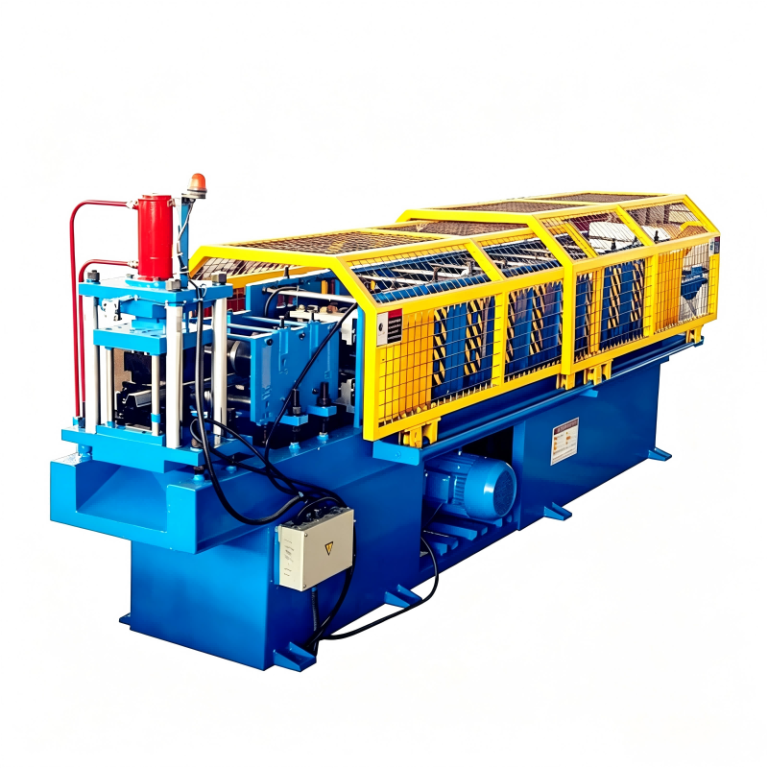
For a proposed keel line, request current equipment photos and identified trial sections from our factory team. A product image does not prove which profiles or tooling are included.
Which light steel keel profile family must the line make?
Direct answer: First identify whether the purchase is for drywall stud and track, ceiling furring, hat or omega, or structural light-gauge members. Send the finished drawings for every required family, plus material grade and thickness range, hole layout, cut lengths and target output. Ask our factory team to identify the exact line modules and provide measured first-off samples for each approved section.
Stud and track sections are used in drywall partitions and light steel framing; omega and hat sections serve different fixing and support details. The tooling and quality checks depend on the actual cross-section. Halcyon supplies equipment factory-direct from our Xiamen production base and carries out the configuration review; the model should be identified in the proposal.
Match the equipment to the application
| Profile family | Buyer question | Evidence to request |
|---|---|---|
| Drywall stud and track | Do both sections fit the partition system and required hole pattern? | Two approved drawings, measured samples, punching layout and a stud-to-track changeover record |
| Ceiling furring or omega | Which forming and cutting details differ from a stud line? | Profile drawing, fixing detail and a matching formed sample |
| Z-section keel or furring | How do the opposed flanges and offset fit the specified bracket or lining? | Offset and flange dimensions, fixing-hole datums and a bracket-fit trial |
| Angle or perimeter trim | Is the required corner, edge or perimeter section an L-angle rather than a stud? | Leg and return dimensions, fixing pattern, finish and installed-corner sample |
| Structural light steel framing | Is the specified steel grade and thickness within the quoted line's validated range? | Material specification, model-specific technical sheet and test plan; structural design remains separate |
The families above are procurement categories, not a claim that one machine makes every profile. Do not treat a factory video of one model as proof of another model's speed, tolerance or changeover time.
Compare quotations using the same input
Send every supplier the same drawing revision, steel grade, thickness range, coil details, punching layout, finished lengths, target output and destination electrical supply. Ask each supplier to mark what is included, excluded or subject to a feasibility check. This prevents a low headline price from hiding different tooling, punching or handling scope.
| Decision item | What the quotation should state |
|---|---|
| Profile and material | Drawing revision, grade and thickness range validated for the proposed model |
| Operations | Hole positions, cutting method, marking and handling included or excluded |
| Changeover | Operator steps, recipe scope and acceptance method for each required section |
| Acceptance | Test coil, sample identifiers, measurement points and agreed tolerances |
| Support and responsibility | Halcyon's supply role, documentation and service scope |
What can a factory acceptance test prove?
A useful test records the actual material, drawing revision, machine settings and measured first-off parts. If repeatability matters, agree subsequent sample checks as well. Record deviations and corrective work before signing the result. Speed, power, accuracy and changeover time belong in a model-specific technical agreement; this page makes no universal performance claim.
Read the stud and track buyer checklist and the FAT evidence checklist for the supporting record fields. These are buying methods, not measured results from a named customer project.
Buyer review method: Halcyon Machinery, updated 24 September 2026. Exact machine data, current equipment photos and original trial evidence are required for a specific offer.
Send us your profile drawing
Send the drawing and production requirements. We will coordinate a model-specific configuration review with our factory team.
Get a quoteDo not buy one “universal” keel line without a profile schedule
Group the buyer's sections by application: C/U stud and track, ceiling furring, hat or omega, and any structural light-gauge members. Mark the required grade, coating, thickness range, hole layout, cut length and target output beside each drawing. Ask our factory team which sections share forming equipment, which require dedicated rolls or cutting tools, and which are outside the offered scope.
Does a stud-and-track trial cover omega or ceiling sections?
No. Keep a measured sample and accepted drawing for every required profile family. Similar material or end use does not prove tooling compatibility.
When should a buyer compare a dedicated line?
When orders focus on one profile family or the proposed shared line needs frequent tooling changes, compare the written setup steps and accepted output for each option using the same production mix.
What belongs in our Xiamen production base's scope document?
Identify the actual model, included profiles, roll sets, punches, cutter, controls, electrical supply, trial material and acceptance method. List exclusions and manual steps explicitly.
Source and limit: Halcyon Machinery buyer-review framework, updated 24 September 2026. This page maps procurement choices, not a claim that one verified machine covers every keel family.