
Z Light Steel Keel Roll Forming Machine
Define the offset Z section and check material, fixing details and sample fit before proposing tooling.
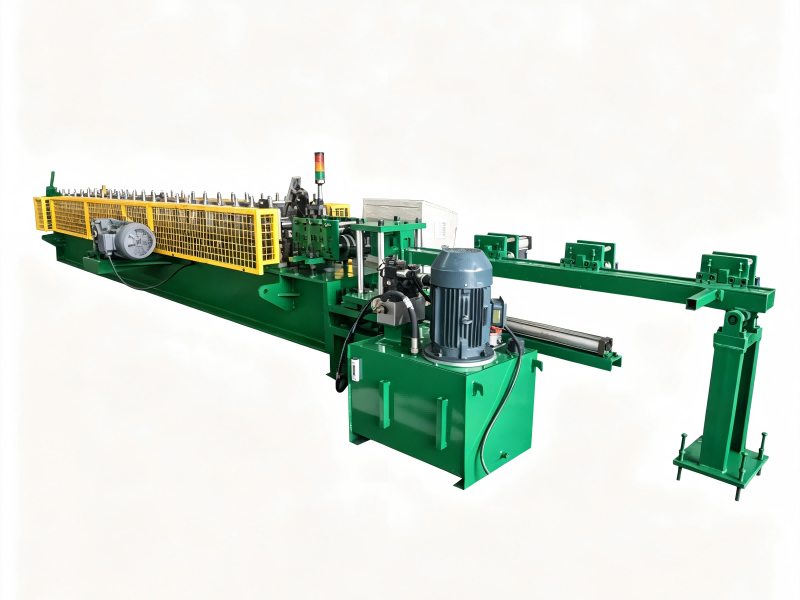
What makes a Z light-steel-keel profile distinct?
Direct answer: The two flanges sit on opposite sides of the web, but the usable section is defined by the buyer's drawing. Record the offset, flange widths, return lips, fixing holes and tolerances. Do not assume that a Z furring member uses the same rolls as a C stud, that pieces can lap without a connector, or that its load capacity follows from its name.
- Sectiondimensioned web offset, flange and lip geometry with tolerances
- Materialsteel grade, coating, thickness range and coil width
- Fixingholes or slots, edge datums and intended bracket or lining connection
- Productioncut lengths, order mix, target output and proposed changeover
- Trialmeasure first-off and repeat pieces, then trial-fit the intended connection
Can existing stud equipment be adapted?
Only a tooling review against both approved sections can answer that. Compare shaft, frame, guides, punching and cutter requirements; get the changeover steps in writing. The stud-and-track page gives the companion profile inputs. Structural suitability remains a design responsibility, separate from machine sample acceptance.
Send us your section drawing
We will review your profile drawing, material, hole pattern and target output with our factory team before confirming the proposed scope and quotation.
Get a quoteTest the Z section with its intended bracket or lining
A Z-shaped light-steel member is defined by its offset, opposed flanges, lips and fixing pattern on the buyer's drawing. Send the grade, coating, thickness range, coil width, cut lengths and target output with that drawing. Ask our factory team to show how the proposed guides, rolls, punching and cut-off hold the approved orientation and hole datums. Measure first-off and repeat pieces, then trial-fit the actual bracket or lining. A visually Z-shaped sample alone does not prove interchangeability with stud tooling or an installed wall rating.
Send the Z-section and bracket drawingsEvidence to collect
- Web offset and flange directions referenced to the drawing datum
- Return lips, bend condition and visible coating
- Hole/slot location measured from the intended fixing edge
- Cut length and repeat-piece fit to the bracket or lining
- Tooling changes required if a C/U stud line is proposed for reuse
Is a Z keel the same as a C stud?
No. Compare the complete section and fixing geometry; even similar material and depth do not prove the same rolls or connection method.
Can the existing stud line be reused?
Only after a documented tooling and trial review of both sections, the required changeover and the accepted samples.
Does a successful sample prove wall performance?
No. The trial checks the formed member and intended fit. Structural, fire, acoustic and other system results require separate project evidence.
Source and limit: Halcyon Machinery section-drawing and fit-review method, updated 24 September 2026. No universal machine capability, installed system rating or guaranteed speed is claimed.