
Support and datum
Show how the member is referenced and restrained without losing access to the weld joint.
HWS-1260 is presented in production-base material as a station for larger structural members. For a buyer, the decisive test is whether the proposed fixtures, access and welding sequence work on a real long member and its connection details. Halcyon prepares the configuration and acceptance evidence with our factory team.
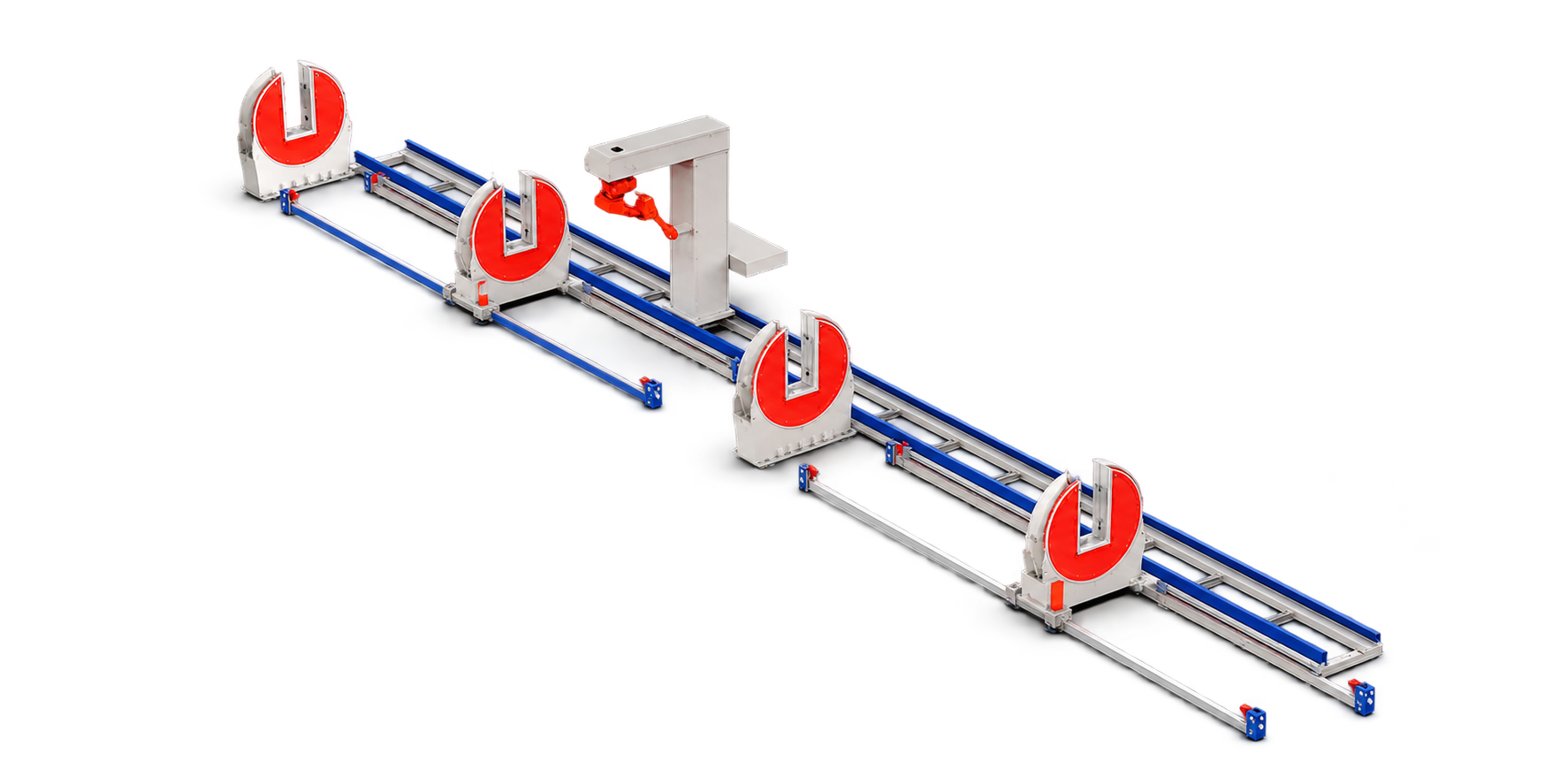
Production-base rendering, not a photo of the exact offered build. Confirm fixtures and process with a current trial.
Large beams and sections need support and accessible weld joints along their full length. An attractive robot layout alone does not prove the offered cell can handle your member.
Show how the member is referenced and restrained without losing access to the weld joint.
Map every seam against positioner travel, robot reach and safe access for inspection.
Define fit-up gap, tack sequence and joint preparation before programming a weld path.
Inspect the same member before and after welding at agreed datum and connection points.
Supplier artwork identifies HWS-1260 as a large structural-member welding station. Its published reference limits are not a promise that every long member or joint will fit the offered cell.
Source and limit: HWS-1260 product artwork identifies a large-section welding station. We have not verified a current offered configuration or project-specific weld quality. Updated 2 October 2026.
Measure the assembly and weld accessibility rather than treating robot motion as a finished-part acceptance test.
The rendering below conveys the long-member handling concept. It is not evidence that the final quoted station has the pictured fixtures, number of supports or welding source.
Options are quoted only when they match the approved production workflow.
Process and power source selected for steel grade, joint type and deposition target.
Robot reach, axis count and external positioner configured to the component envelope.
Dedicated or adjustable jigs for the approved member and node families.
Touch sensing, vision or seam tracking according to joint preparation and tolerance.
Local extraction and filtration integrated with the cell enclosure.
Optional program preparation and production-data integration.
Positioning and welding of structural sections in a controlled workstation.
This model route focuses on long-member support and weld access. Before comparing the machine total, review robot packages, pre-engineered cells and part-specific structural welding stations. Keep the same workpiece and acceptance criteria, and identify which handling, guarding, utilities, trial and service responsibilities are included.
No. Maximum length depends on the quoted supports, positioner and workshop layout. Send your largest drawing and weight for a layout check.
Use a member with its most difficult attachment, longest unsupported span and hardest-to-reach weld seam.
No. Agree joint preparation, welding procedure and inspection criteria, then inspect a representative completed member.
We will confirm the suitable model, process route, line modules and the values that can be guaranteed for your material.