
By Halcyon Machinery · Technical content review · Published
Direct buyer answer
Before accepting a Z purlin roll forming line, test two identified purlins in the lap orientation and hole pattern specified by the project engineer. Measure each section and hole from agreed datums, then assemble the pair and check whether the specified fasteners can be positioned without forcing the parts. Repeat after the line has run and after a size or recipe change. A visible fit check is production evidence, not a structural-capacity approval.
Start with the connection drawing, not a standard hole assumption
The structural designer should supply the approved Z-section, lap direction, overlap, bolt or slot schedule, support and bracing details, and drawing revision. A hole pattern copied from a different purlin family can fail even when the web depth looks similar. For example, Stramit's Exacta C/Z manual and Lysaght's SUPAPURLIN guide publish system-specific lap and holing details. Those details illustrate why the connection package matters; their dimensions and fastener rules must not be applied to a different engineered system without approval.
Send our factory team the web, flange, lip, thickness, steel grade, coating, cut length, part orientation and hole schedule as one controlled package. Mark the measurement datum and which end of each part enters the lap. If the engineer's drawing is incomplete, seek the missing design decision before specifying punch dies.
Witness a paired-part trial
| Trial step | Record to keep | What it can establish |
|---|---|---|
| Identify the input | Drawing revision, coil identity, grade, base-metal thickness, coating and proposed machine setup. | The samples can be traced to the material and design being purchased. |
| Measure single parts | Web, flanges, lips, cut length, hole diameter or slot shape, and each location from the approved datum. | Each part can be compared with the agreed dimensional tolerances. |
| Assemble the lap | Part handedness, overlap, registration of paired holes and whether the specified fastener can be inserted without forcing the parts. | The sampled geometry is compatible with the approved assembly detail under trial conditions. |
| Repeat during production | First accepted pair, later pair, production time, settings, adjustments and rejected setup pieces. | One good photograph has not hidden drift or a one-off adjustment. |
| Change size or recipe | Last accepted part before change, first accepted part after change, new hole pattern and changed tool settings. | The quoted changeover scope can be observed for the buyer's production mix. |
Do not enlarge a hole in the trial part or force the joint together merely to make the demonstration look successful. Record a mismatch and agree whether the drawing, punch position, formed section or cut datum needs correction. Retest the final configuration on identified material.
Separate machine acceptance from structural approval
Nested samples and aligned holes show geometric and manufacturing fit. They do not establish load capacity, restraint, fatigue performance, corrosion life or the correct bolt arrangement. The responsible project engineer must approve those design questions using the applicable system documents. A supplier's machine quotation should state the tooling, punching positions, excluded operations and trial method; it should not substitute a catalogue speed or a generic structural claim for an accepted sample.
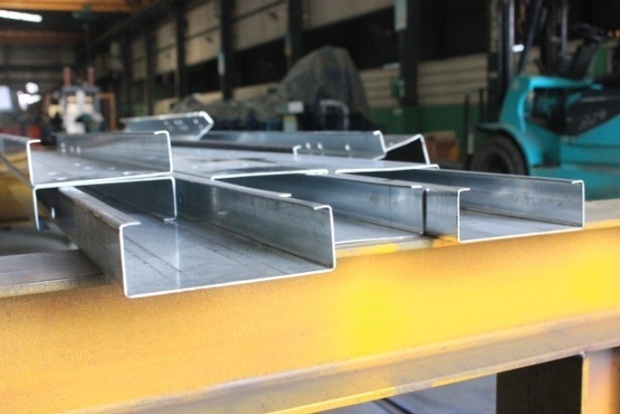
The Z purlin machine page outlines the equipment inputs. If both C and Z products are needed, compare our C/Z section references and the C/Z changeover test record. The published HCZ-S20 sample photo does not identify a client's lap-hole schedule; it is context for asking for a witnessed test.
Questions buyers ask
Will any two Z purlins of the same nominal depth lap correctly?
No. Flange geometry, thickness, lip shape, handing, length and the engineered hole schedule all matter. Test the exact approved pair rather than relying on nominal depth.
Can a machine photograph prove lap-hole accuracy?
No. Keep measured, labelled parts and the setup record. The photograph above does not show an accepted lap or measured holes.
Does a good trial pair certify the roof structure?
No. It verifies the sampled manufacturing fit. Structural capacity, restraints, fasteners and installation require the responsible engineer's approval.
What to send for a comparable quote
Provide the approved section and connection drawings, revision, steel grade and thickness range, coating, handedness, cut lengths, hole schedule, intended production mix and target accepted output. Ask each supplier to list included punch tools, changeover operations and the paired-part acceptance test. Send the drawings to Halcyon for a configuration review with our factory team.
Sources and scope: HCZ-S20 equipment and sample reference; Stramit Exacta technical manual; Lysaght SUPAPURLIN design and installation guide. The latter two describe their own proprietary systems, not a Halcyon equipment specification. Halcyon reviewed this procurement checklist on 2 October 2026. Final machine capability and acceptance criteria require the buyer's approved documents and a machine-specific factory test.
Discuss your Z purlin trial package