
By Halcyon Machinery · Technical content review · Published · Updated
Review the cut-off station as a complete operation rather than an isolated blade or die. Confirm the cutting method, how the profile is supported before and after the cut, how scrap is controlled, what guarding and isolation apply, and how the finished end will be measured during the agreed material trial.
For a proposed line or retrofit, review the roll formed section cutting equipment alongside this checklist. Specify the profile drawing, cut-length range, cut-face requirements and controls interface. The travelling cut-off video shows a process example.
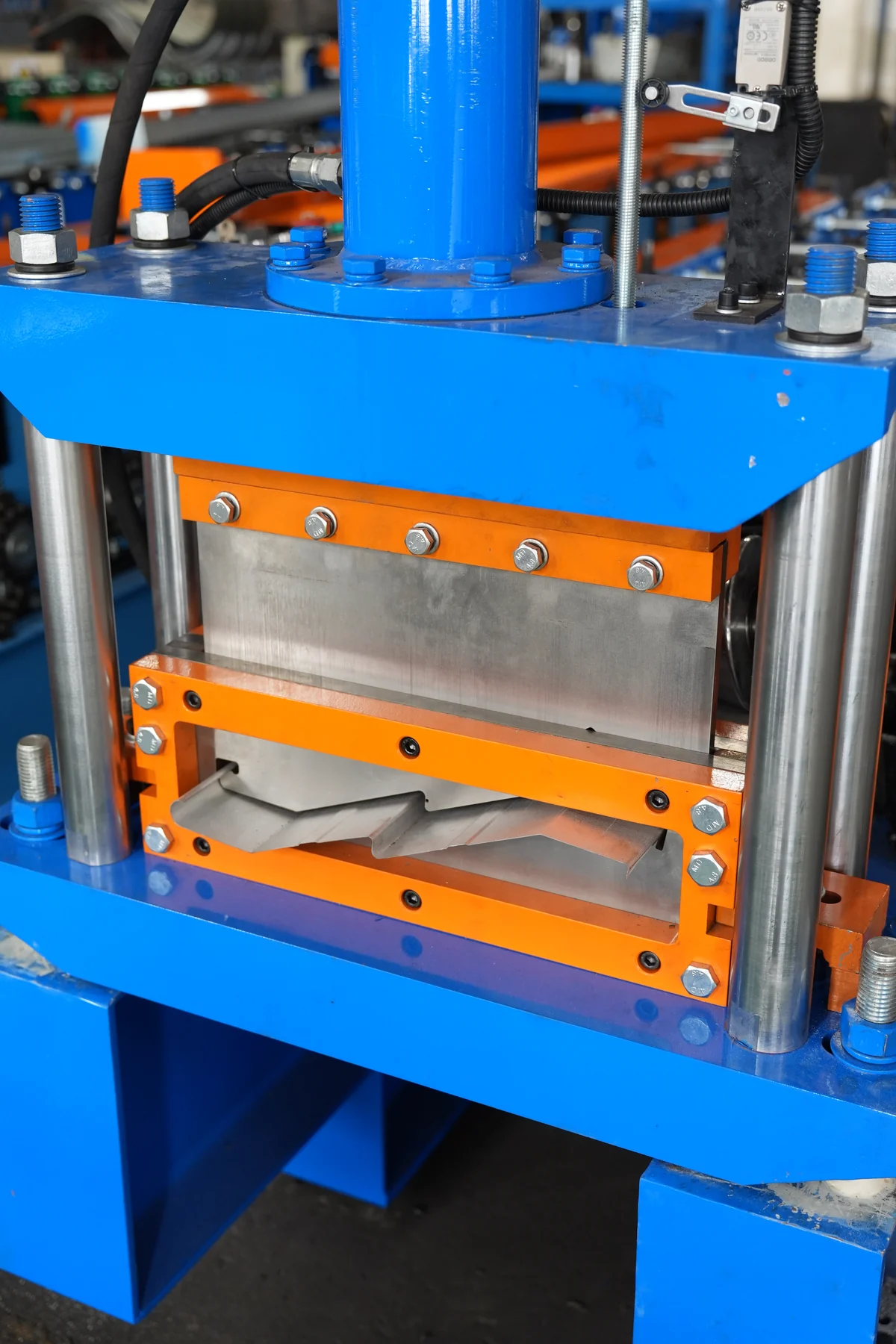
Method and support around the cut
Review the cutter against the actual profile drawing, material grade and thickness range. A saw, hydraulic die or other method changes the support, scrap control and inspection needed. Ask how the profile is guided into the station and held after separation, since poor support can affect the cut end or handling even when the forming stands are set correctly, and record the final guide and support positions used in the trial.
Evidence from the finished end
Measure the agreed features on labeled samples from identified trial material. Record burrs, deformation, cut length and any downstream handling issue against the agreed acceptance method, and do not infer tolerance or blade life from a short demonstration.
Station review table
| Review item | Evidence to record | Why it matters |
|---|---|---|
| Cutting method | Written scope and station drawing | Connects the station to the ordered profile |
| Profile support | Guide and support positions | Shows how the part is held before and after cutting |
| Scrap handling | Collection and removal method | Prevents loose scrap from becoming an unrecorded risk |
| Safety scope | Guarding, interlocks and isolation information | Defines the supplier and site responsibilities |
| Trial evidence | Material ID, sample ID and measured cut end | Links acceptance to the actual setup |
Blank cut-off trial record
This fourteen-part worksheet links the drawing and material to sample IDs, cut length, cut-end condition, profile support, line response, changes and the final disposition, so cutting proposals can be compared on traceable measurements.
Download the blank cut-off trial record (TXT). Agree the measurement method and acceptance limits with our factory team before the trial, and keep first-off and later samples separate along with any stop/restart observations.
Questions buyers ask
Which cut-off method is best for every roll forming line?
There is no single best method for every profile. The choice depends on geometry, material, thickness range, required end condition, production sequence and the approved machine design.
Does a clean-looking cut prove dimensional accuracy?
No. Visual appearance is useful, but length and profile dimensions must be measured on identified samples using the agreed inspection method.
What should the buyer retain after the trial?
Keep the drawing revision, material record, final station settings, sample IDs, measurements, deviations and any corrective action.
Related technical references
tooling inspection checklist · quotation checklist · all buyer guides
Source: Workshop photograph used as context for the cut-off inspection. Order-specific dimensions, tolerances, safety provisions, price and delivery require written confirmation.
For an order-specific review, send the profile drawing, steel grade, thickness range, punching layout and target output, plus the destination electrical standard and acceptance method where they affect the line scope.
Leave your email for a technical follow-up