
By Halcyon Machinery · Technical content review · Published · Updated
Direct answer
Approve a solar mounting roll forming line against the exact parts you intend to sell. Send revision-controlled profile drawings, steel grade and coating, the complete thickness range, punching layout, cut lengths, target output and acceptance method. The FAT should identify the trial coil and samples, measure the agreed product features, record changeover steps and separate observed results from catalogue claims.
Freeze the part definition first
Control the profile drawing revision, steel specification, coating, thickness range and cut-length range before tooling approval. Solar support sections with similar names may use different lips, slots or connection details, so a catalogue family name is not enough.
Match punching and cutting to the installed part
List every hole, slot, embossing and cut-end requirement with its reference dimension. Confirm the sequence, tooling scope and support around each operation. The trial plan should measure finished parts rather than infer capability from the machine photograph.
Use traceable FAT samples
Record the material identity, setup, drawing revision, sample IDs, measurements, rejected parts and unresolved deviations. When several profiles are included, test the agreed changeover and first accepted piece for each representative setup.
Write the acceptance rule before the trial
For every agreed feature, state the measurement method, sampling point, instrument, responsible party and pass/fail rule before material enters the line. Record stops, manual adjustment and scrap separately from accepted output. This prevents a visually smooth run from replacing the evidence needed to approve the machine for the buyer's product mix.
Halcyon original evidence framework
Halcyon's solar-profile evidence chain keeps five records connected. If one link is missing, mark that item OPEN rather than treating the line as accepted.
| Evidence link | Record required | Decision value |
|---|---|---|
| R1 — Requirement | Drawing revision, hole pattern, steel specification and acceptance rule | Locks the part that the machine must make |
| R2 — Input | Trial coil identity, grade, coating and measured thickness | Shows what material produced the result |
| R3 — Machine state | Tooling set, recipe, guides, punching and cut-off settings | Makes the tested setup repeatable |
| R4 — Output | Labeled sample, measurement sheet, rejected parts and run notes | Connects claims to physical evidence |
| R5 — Closure | Deviation owner, corrective action, re-test evidence and approval status | Prevents open items from disappearing before shipment |
Methodology note: This is an original Halcyon buyer-review template for organizing procurement evidence. It is not a certification and does not replace the signed technical agreement, contract or applicable safety requirements.
Buyer review checklist
| Review item | Evidence to record | Why it matters |
|---|---|---|
| Profile control | Approved drawings and revision numbers | Prevents the wrong section from becoming the test basis |
| Material input | Grade, coating and full thickness range | Defines the coil conditions the tooling must handle |
| Inline features | Hole, slot, embossing and marking layouts | Clarifies the processing modules and sequence |
| Changeover | Shared tooling, separate tooling and settings | Makes product-mix claims reviewable |
| FAT evidence | Material ID, sample IDs and measurement record | Links observed results to the approved parts |
Questions buyers ask
Can one line make several solar mounting profiles?
Only the profiles confirmed in the written compatibility and tooling matrix should be treated as included. Each drawing and required changeover must be reviewed.
Is a running video enough for acceptance?
No. A useful FAT also identifies the material and samples, records settings and changeover, and measures the agreed product features.
What should the buyer send before quotation?
Send profile drawings, steel grade and coating, thickness range, punching layout, cut lengths, target output and the intended acceptance method.
Information to send for an order-specific review
Provide the profile drawing, steel grade, thickness range, punching layout and target output. Add cut lengths, product mix, destination electrical standard, available building dimensions and the required acceptance method when they affect the line scope.
If your approved part is a solar strut channel, compare the HSM-41 strut-channel configuration and slot checks against that section drawing and mounting-hole layout. Its published reference does not establish suitability for every solar support profile. Keep the tooling and measured samples specific to the channel being quoted.
Related technical references
solar mounting machine overview · FAT evidence checklist · profile sample review guide
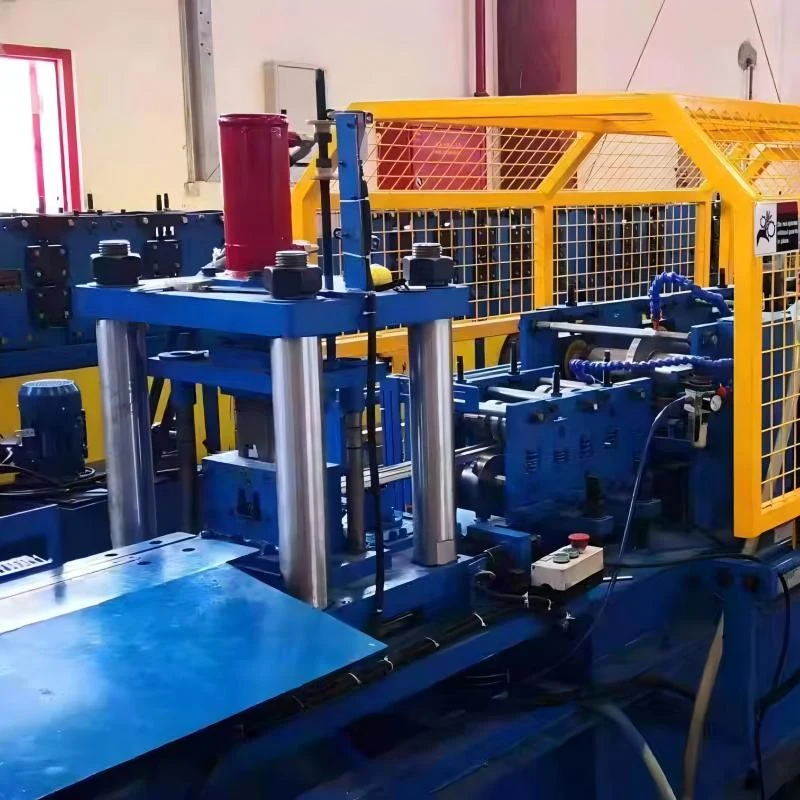
Source and scope: Real photograph from our Xiamen production base's material library; source product page reviewed 23 September 2026. The image is contextual evidence only. Order-specific dimensions, ratings, tolerances, safety scope, price and delivery require written confirmation.
Leave your email for a technical follow-up