
Solar Bracket Roll Forming Machine for PV Mounting
Compare PV rail, purlin and bracket profiles against the mounting-system drawing before choosing a forming line.
Direct buyer answer
A solar mounting roll forming machine must reproduce the approved structural section and its connection details. Start with the rail, purlin or bracket drawing, steel grade, coating, thickness range, slot and bolt-hole datum, cut lengths and target output. Similar-looking channels can fail on site if slots, lips or fastener fit differ. Halcyon works directly with the factory production team to document tooling, punching and cutting for each proposed section and obtain measured trial parts.
The phrase solar bracket roll forming line describes the same buying task when the requested product is a PV support bracket. It does not imply that one machine forms every C, U and hat profile. Ask which roll sets, guides, punches and cut tools change between the approved drawings.
Separate the product types before comparing quotes
| Part | Buyer drawing check | Trial evidence |
|---|---|---|
| Mounting rail or strut | Web, legs, lips, slot pitch, coating and mating nuts | Measured section and slot positions; trial with specified fasteners |
| PV purlin or beam | Member geometry, splice and connection-hole positions | Full-length sample, cut length and joint fit; structural design remains separate |
| Bracket or clip | Blank/formed shape, bends, holes, handedness and mating assembly | Sample set for every variant and installation-fit record |
What to send for a model-specific proposal
- Profile drawing revision and the mounting-system connection details.
- Steel grade, measured thickness range, coating and coil width for each part.
- Punching layout, slot tolerances, cut-length range and required production mix.
- Target output with the actual hole pattern, changeover frequency and shift plan.
- Electrical supply, floor layout, preferred handling and inspection method.
Use the same input package with every supplier. Compare the proposed modules, tooling-change sequence, material assumptions, exclusions and measured sample results rather than a headline forming speed alone. Our Xiamen production base's PV10 product description and HSM-41 channel description show distinct profile-focused examples; their published figures are references for those models, not universal Halcyon guarantees or proof that either suits your drawing.
Production-base examples: define the profile before selecting a line
Direct comparison: our Xiamen production base's published PV10 bracket line and SU Series single-U line describe different section envelopes. Compare the requested drawing with the right family before comparing a price or forming-speed headline.
| Production-base published example | Published section and material range | Buyer check before quotation |
|---|---|---|
| PV10 bracket line | Width 40–100 mm; height 25–60 mm; material thickness 1.0–2.5 mm. | Match the actual profile drawing and each punching pattern; confirm which of the proposed tools and profile changes are included. |
| Production-base SU Series single-U line | U width 70–150 mm; web height 30–70 mm; material thickness 2.0–3.5 mm. | Check the specified U section, hole datum, coil material and accepted changeover samples. Do not infer C, Z or hat tooling from the single-U range. |
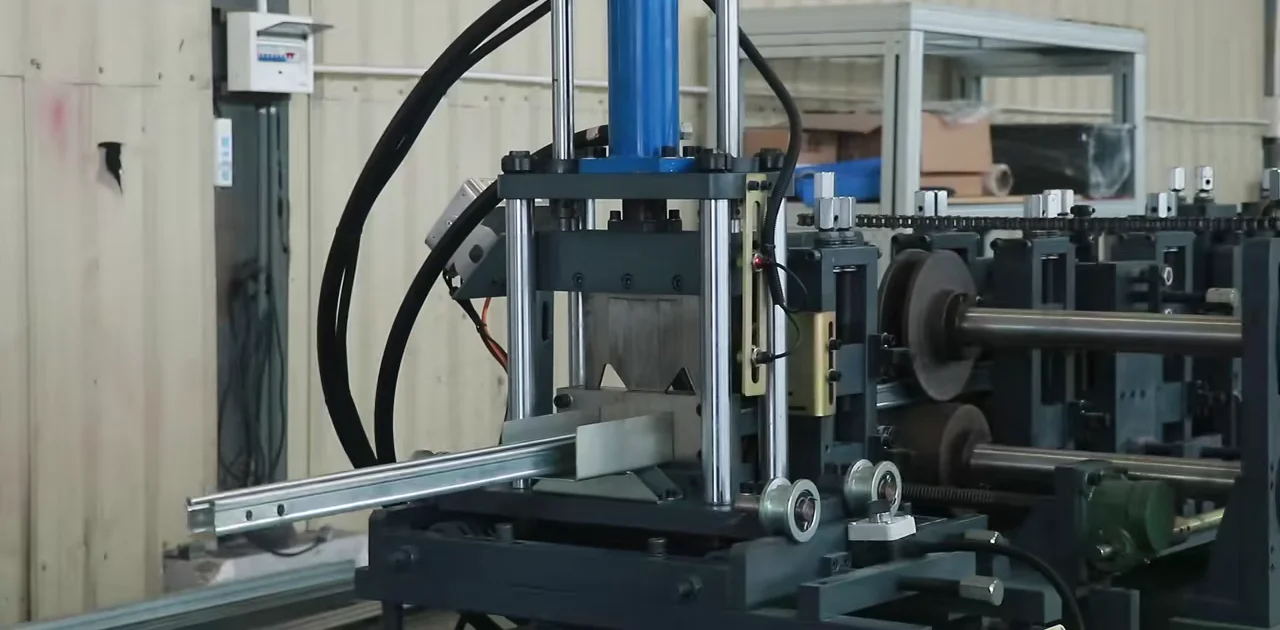
Source: linked production-base product pages, reviewed 29 September 2026. Our Xiamen production base's catalogue ranges are model-specific descriptions, not a Halcyon quotation or guarantee for a proposed build. Width and height labels must be reconciled against your dimensioned section. This page's photo is a separate C/U line still; it does not identify either tabled model. Request a current machine proposal and measured trial parts.
Acceptance: measure the part and test the connection
- Agree a first-off and later-sample plan for the minimum, maximum and common requested sections.
- Label each sample with drawing revision, material, machine setup and cut length.
- Measure web, flanges, lips, holes and slots against the approved datums and tolerances.
- Trial the sample with the specified clamps, bolts and adjacent mounting members.
- Record actual output for the agreed profile and punching schedule, including changeover scrap and stops.
Boundary: a forming trial checks the manufactured component. It does not certify the PV structure, wind or snow loads, corrosion life or local code compliance. The project engineer and mounting-system supplier must approve those matters independently.
Buyer questions
Can a single line make C, U and hat solar brackets?
Only if the quoted tooling and changeover plan explicitly cover each drawing. Request samples from every proposed section and verify the installation fit.
Is a supplier's published speed my production output?
No. Compare measured output using your material, punching layout, part length, handling and changeover conditions.
What proves a solar rail is suitable for our project?
The machine trial proves dimensions and connection fit for the approved part. Structural capacity and corrosion suitability require separate engineering and material evidence.
For ordinary building C/Z members, compare the purlin machine family; do not treat a PV rail or slotted strut as the same finished section.
Related: PV component acceptance checklist, HSM-41 model review and structural equipment range.
Source and review: Our Xiamen production base's product descriptions linked above; Halcyon Machinery buyer-review framework, updated 24 September 2026. Halcyon works directly with factory production teams on configuration review and supply. The equipment photo and production figures for an offered build must be verified with our factory team.
Send PV section drawings for review