
By Halcyon Machinery · Factory-direct from our Xiamen production base · Published
Direct answer
A suspended ceiling product range is not made on one machine. Plan one roll forming line per profile family: a furring or hat channel machine for concealed ceilings, a wall angle machine for perimeter trim, and a T-grid arrangement (main tee and cross tee) if you sell exposed grid ceilings. Profiles can share a forming base only when the quotation names the tooling and changeover for each drawing. Send all your ceiling drawings together and we reply with a written line plan and quotation within 24 hours.
Price ranges
| T-grid ceiling machines | US$33,000–49,000 (standard) · US$59,000–117,000 (premium), FOB China |
| Furring channel machines | US$21,000–33,000 (standard) · US$39,000–78,000 (premium), FOB China |
Standard covers the first two configuration levels (single-profile and multi-profile / quick-change); premium covers fully automatic lines.
Final price depends on profile, thickness, speed, punching and automation. Excludes freight, import duties and installation. Send your profile drawing for a quotation within 24 hours. North American configurations (480V/60Hz, UL and local requirements) are quoted separately.
Large complete lines (e.g. truck chassis beam lines or full cable tray lines) are quoted per project, typically above US$150,000.
Manufactured in our Xiamen factory · 35+ years of roll forming experience.
Get a quote for this machine
Send your profile drawing or a photo of the profile. We reply within 24 hours with a configuration and price.
Commercial terms
- Lead time
- standard machines 30–60 days; automatic and heavy-duty lines 60–120 days (confirmed in the quotation).
- Warranty
- 12 months on the machine, lifetime technical support by video and remote guidance; wear parts excluded.
- Payment
- 30% deposit; 70% before shipment, after you approve the trial-run video.
- Shipping
- FOB Xiamen, China.
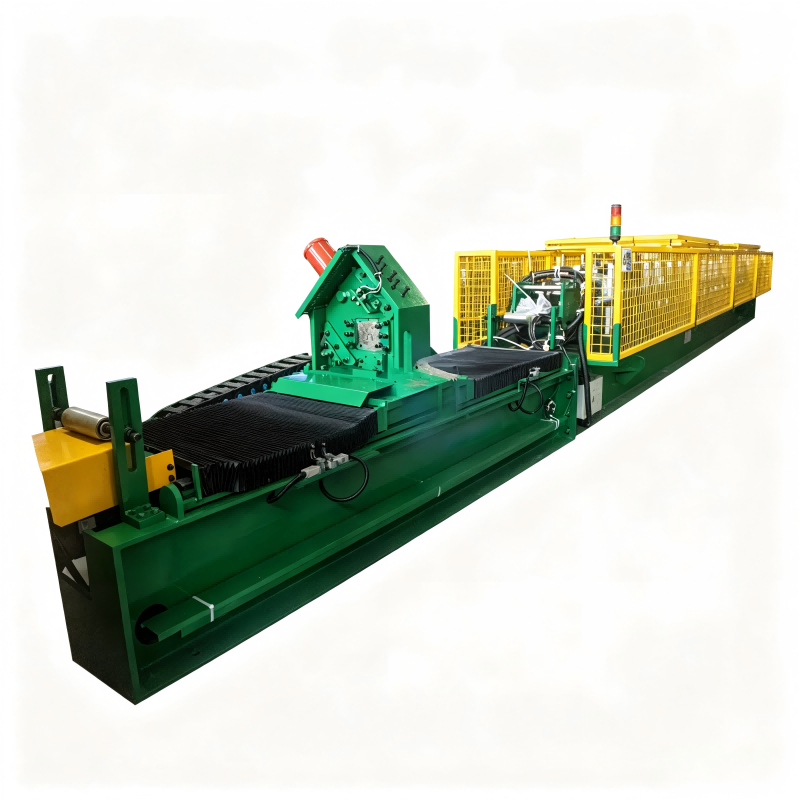
Which ceiling profile needs which machine?
Start from the products you will sell, not from a machine name. Each row below is a separate drawing and, in most quotations, a separate roll set.
| Ceiling profile | Where it is used | Machine to ask for | What changes the tooling |
|---|---|---|---|
| Furring / hat (omega) channel | Concealed plasterboard ceilings and cladding subframes | Furring channel roll forming machine | Face width, leg depth, flanges, lips, embossing, fixing holes |
| Carrying / main channel | Primary members that hang from the suspension rods | Separate drawing; may share a base with furring only if the quote shows the tooling | Section size, thickness, hanger slots |
| Wall angle (perimeter L) | Ceiling edge at the wall | Wall angle roll forming machine | Leg sizes, edge folds, perforation, visible face |
| Main tee and cross tee | Exposed lay-in grid ceilings | T-grid roll forming machine | Face, bulb, connector slots, end clips |
| Stud and track (wall) | Partition walls in the same drywall project | Stud and track roll forming machine | C stud and U track sections, service holes |
For a single-profile decision (furring or T-grid only), the ceiling channel roll forming machine page goes deeper. This guide is for buyers planning a complete ceiling product range.
Three ways to set up a ceiling profile workshop
| Set-up | How it works | Usually chosen for |
|---|---|---|
| One dedicated line per profile | Each profile has its own forming line; no changeover between products | Steady volume of each profile and several operators |
| Shared forming base, changeable roll sets | Profile-specific roll and punching units on one base; changeover stops production | Smaller volumes of several profiles |
| Furring line plus separate grid lines | Furring and angle for concealed ceilings first; main and cross tee lines added later | Businesses starting in plasterboard ceilings and adding exposed grid |
Which option fits depends on your monthly volume per profile and how often you change products. A shared base costs less to buy but every changeover is lost production time, so ask for the changeover steps in writing.
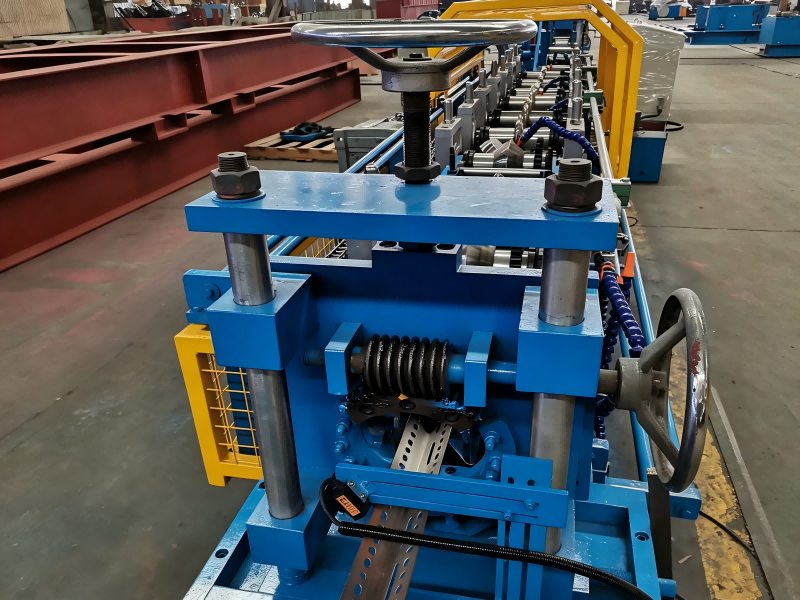
Plan your ceiling line — quotation in 24 hours
Send drawings of every ceiling profile you sell, with steel grade, thickness range, slots or holes and target output. Our factory engineers in Xiamen reply with a written line plan and quotation within 24 hours.
Quote: ceiling profile lineQuote: furring channel lineWhatsApp
What changes the price of a ceiling profile line
| Price factor | Why it matters | What to send |
|---|---|---|
| Number of profiles | Each extra profile adds a roll set or a whole line | One drawing per profile |
| Thickness and steel | A wider thickness range needs heavier shafts and frame | Steel grade, coating, thickness range |
| Punching, slots, embossing | Hanger slots, connector slots and embossing add tooling and control | Hole and slot layout with datum |
| Cutting method | Stop-to-cut or flying cut changes cutter and speed | Finished lengths and target output |
| Stacking and packing | Automatic counting and bundling saves labour | Bundle size and packing method |
| Delivery terms | FOB or CIF, spare rolls and installation are separate lines | Destination port and services needed |
We do not publish price lists; quotations differ by configuration and market. See the roll forming machine price guide for how to compare offers.
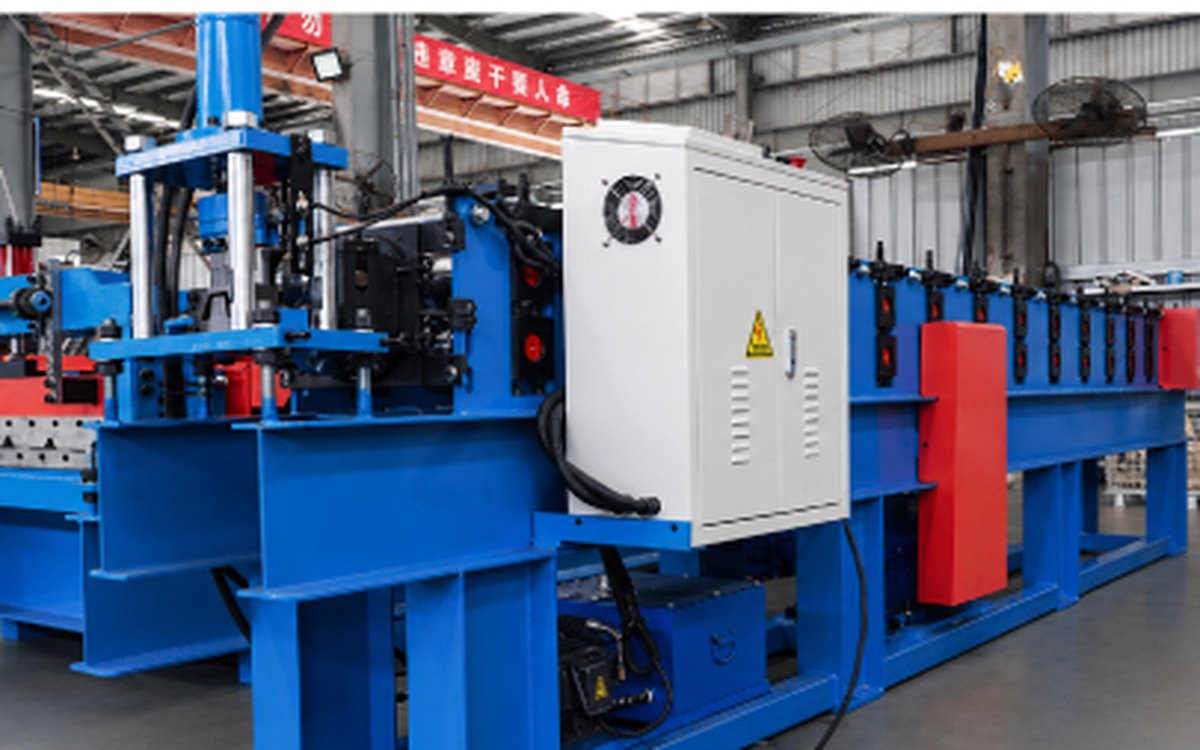
Watch: how a hat-shaped ceiling channel is formed
A short Halcyon video following the strip through the forming stands of a hat-shaped ceiling channel line.
Questions buyers ask
How many roll forming machines does a suspended ceiling business need?
Usually one line per profile family: a furring or hat channel line, a wall angle line, and for exposed grid ceilings a main tee and cross tee arrangement. Some profiles can share a forming base with changed tooling, but only if the quotation lists the tooling and changeover for each drawing.
Can a furring channel machine also make wall angle?
Not by default. A hat or furring section and a plain L angle have different roll sets. Ask for a separate tooling list and a measured sample of each profile before treating them as one line.
Is a T-grid machine the same as a ceiling channel machine?
No. Exposed main and cross tees need face, bulb and connector-slot tooling that concealed furring channels do not. They are usually quoted as their own line or as profile-specific units on a shared base.
How much does a ceiling channel roll forming machine cost?
We quote by configuration, not from a price list. The number of profiles, thickness range, punching or slotting, embossing, cutting method and stacking all change the price. Send your drawings and we reply with a written quotation within 24 hours.
What should I send to get a quotation?
A dimensioned drawing for every ceiling member (furring, angle, main tee, cross tee), steel grade, coating, thickness range, hole or slot layout, finished lengths, target output and destination port.
What to send for a quotation
Dimensioned drawings of each ceiling member, steel grade and coating, thickness range, coil width, hole or slot layout, finished lengths, monthly volume per profile, voltage and destination port. See reference projects from our Xiamen production base.
Get a ceiling line quotation in 24 hours
Factory-direct from our Xiamen production base. Send your drawings by form or WhatsApp.
Related guides
ceiling channel machine · furring channel machine · wall angle machine · T-grid machine · all light steel keel machines · LGS framing vs stud and track
Sources: Halcyon product pages for ceiling, furring, wall angle and T-grid equipment; HFC-45 catalogue data; reviewed 8 October 2026. No prices or output figures are published because they depend on the drawings and configuration.