
A new roll forming machine from China typically costs US$20,000–59,000 for a roof sheet line, US$23,000–124,000 for a stud and track line and US$39,000–143,000 for a C/Z purlin line (FOB China). The price depends on the profile, material thickness, line speed, punching, cutting and level of automation; freight, import duties and installation are extra. Published ranges across all machine types: US$20,000–143,000 FOB China. Large complete lines (e.g. truck chassis beam lines or full cable tray lines) are quoted per project, typically above US$150,000.
Price ranges
| C/Z purlin roll forming machines | US$39,000–62,000 (standard) · US$72,000–143,000 (premium), FOB China |
| Stud and track (light steel keel) machines | US$23,000–42,000 (standard) · US$59,000–124,000 (premium), FOB China |
| Trapezoidal roof sheet machines | US$20,000–29,000 (standard) · US$33,000–59,000 (premium), FOB China |
| Corrugated sheet machines | US$20,000–29,000 (standard) · US$31,000–49,000 (premium), FOB China |
| Double-layer roof sheet machines | US$23,000–34,000 (standard) · US$36,000–59,000 (premium), FOB China |
| Floor deck roll forming machines | US$49,000–72,000 (standard) · US$78,000–130,000 (premium), FOB China |
| T-grid ceiling machines | US$33,000–49,000 (standard) · US$59,000–117,000 (premium), FOB China |
| Furring channel machines | US$21,000–33,000 (standard) · US$39,000–78,000 (premium), FOB China |
| Cable tray roll forming lines | US$65,000–98,000 (standard) · US$111,000–169,000 (premium), FOB China |
| Light gauge steel framing machines | US$59,000–91,000 (standard) · US$104,000–169,000 (premium), FOB China |
| Standing seam machines | US$23,000–36,000 (standard) · US$45,000–75,000 (premium), FOB China |
| Glazed tile (step tile) machines | US$21,000–31,000 (standard) · US$34,000–55,000 (premium), FOB China |
Standard covers the first two configuration levels (single-profile and multi-profile / quick-change); premium covers fully automatic lines.
Final price depends on profile, thickness, speed, punching and automation. Excludes freight, import duties and installation. Send your profile drawing for a quotation within 24 hours. North American configurations (480V/60Hz, UL and local requirements) are quoted separately.
Large complete lines (e.g. truck chassis beam lines or full cable tray lines) are quoted per project, typically above US$150,000.
Manufactured in our Xiamen factory · 35+ years of roll forming experience.
Get a quote for this machine
Send your profile drawing or a photo of the profile. We reply within 24 hours with a configuration and price.
Commercial terms
- Lead time
- standard machines 30–60 days; automatic and heavy-duty lines 60–120 days (confirmed in the quotation).
- Warranty
- 12 months on the machine, lifetime technical support by video and remote guidance; wear parts excluded.
- Payment
- 30% deposit; 70% before shipment, after you approve the trial-run video.
- Shipping
- FOB Xiamen, China.
By Halcyon Machinery · Updated
Roll forming machine cost is more than the equipment quote. Build a first-year cash budget from the offered line and tooling, packing and freight, import charges, site preparation and commissioning, then the inputs needed to make accepted parts. Use dated, itemized supplier and freight offers plus your own operating assumptions; a generic online machine price cannot establish your landed cost.
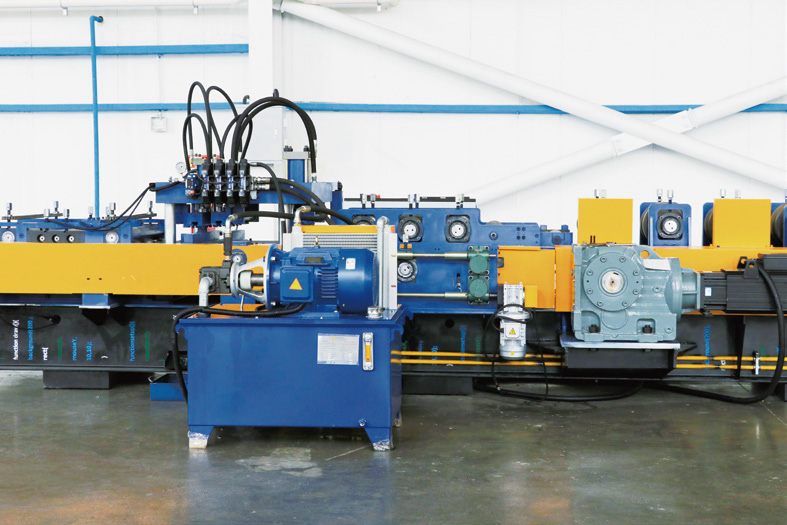
Start with one defined production requirement
Give each prospective supplier the same profile drawing revision, steel grade, thickness range, punching layout and target output. Ask for a written included/optional/excluded schedule. The quotation checklist covers that module-by-module inquiry. This guide addresses the additional cash needed to receive, install and run the line. Record currency, tax treatment, quotation validity and who pays each item so unlike totals are not compared as equivalent.
Build a first-year cash budget
| Cost group | What to enter | Evidence or owner |
|---|---|---|
| Equipment and tooling | Offered line, required dies, handling options and spare parts; mark each inclusion and exclusion. | Dated, itemized equipment offer tied to the approved drawing. |
| Freight and import | Packing, inland and ocean/air freight, insurance, customs, duties and taxes where applicable. | Forwarder and local import advice for the named destination and trade terms. |
| Site and startup | Foundation, lifting, electrical connection, installation, commissioning, training and trial material. | Supplier responsibility matrix and local contractor estimates. |
| First-year operation | Steel coil, yield or scrap, labour, energy, maintenance, consumables and service. | Your production plan, utility rates, actual trial records and service terms. |
| Accepted output | Expected saleable parts after setup, changeovers and inspection losses. | Trial acceptance method and conservative order-demand scenarios. |
Keep one-time cash outlay separate from recurring operating cost and from accounting depreciation. To compare cost per accepted part, use the same period, product mix and accepted-output assumption for each option. Leave unknown amounts blank until the responsible supplier, forwarder or local adviser confirms them; do not infer a budget from catalogue speed alone.
How can I assess the investment without a generic payback promise?
Build a lower-demand and an expected-demand scenario from your actual orders, saleable output, material yield, labour, energy and maintenance assumptions. A purchase-price multiple or fixed payback period cannot be inferred from the machine category. Recheck the budget when the approved profile, destination, trade terms or production mix changes.
How can I compare two roll forming quotations with different automation?
Convert both quotations into the same scope before comparing totals. List the required forming, punching, cutting, coil handling and discharge modules, then mark each as included, optional or excluded. Compare output only under the same production assumptions. Halcyon’s C/Z proposal framework treats coil loading, hole processing, adjustment and finished-part handling as configuration choices.
Apply the answer to your order
Illustrative comparison: one offer includes a run-out table and the other includes a stacker. Ask what labour and transfer operations remain in each arrangement, what parts the stacker can handle and what site space it needs. The higher equipment total alone cannot establish which proposal better fits your orders.
Evidence to request
- Identical drawing revision and material range in both proposals.
- Included/excluded module schedule and interface responsibilities.
- Output assumptions, acceptance method and support scope recorded in writing.
Supporting reference: C/Z line optional configuration scope. This reference provides context; order-specific performance and scope still require written confirmation.
Download the editable buyer worksheet (.txt) · Link to this answer
Roll forming machine price FAQ
How much does a roll forming machine cost?
A new roll forming machine from China typically costs US$20,000–59,000 for a trapezoidal roof sheet line, US$23,000–124,000 for a stud and track line, US$39,000–143,000 for a C/Z purlin line and US$49,000–130,000 for a floor deck line, FOB China. Standard lines sit at the lower end; fully automatic lines with servo punching, flying cut-off and automatic stacking sit at the upper end. Published ranges across all machine types: US$20,000–143,000 FOB China. Large complete lines (e.g. truck chassis beam lines or full cable tray lines) are quoted per project, typically above US$150,000.
How much does a roll forming machine for roof panels cost?
For roof panels, a standard trapezoidal or corrugated sheet machine costs about US$20,000–29,000 and a premium line about US$31,000–59,000 FOB China. Double-layer roof sheet machines are about US$23,000–59,000, standing seam machines US$23,000–75,000 and glazed tile (step tile) machines US$21,000–55,000, depending on thickness, speed, cutting and stacking.
What is a roll forming machine?
A roll forming machine bends a flat steel coil into a fixed cross-section by passing it through a series of paired roller stations, then punches and cuts the profile to length. One line typically includes a decoiler, feeding and guiding, forming stands, punching, cut-off, a PLC control system and a run-out table or stacker. It is used for purlins, studs and tracks, roof and wall sheets and floor deck. See roll forming machine types and selection.
Why do quotations for the same profile differ so much?
Quotations differ mainly in scope: number of forming stations, roller material and heat treatment, stop-to-cut versus flying cut-off, pre-punching or servo punching, decoiler capacity, levelling, stacking and control-system brand. Compare offers only after listing each module as included, optional or excluded for the same drawing and thickness range.
What is not included in the machine price?
FOB prices exclude ocean freight, insurance, import duties and taxes, foundations and electrical connection at your site, installation and commissioning travel, and coil for trials unless the quotation states otherwise. North American configurations (480V/60Hz, UL and local requirements) are quoted separately.
Prepare the next technical discussion
Use this worksheet to mark confirmed information and unresolved items. Attach the latest section drawing, material specification and production requirement so the discussion concerns your actual parts. See the roll forming machine quotation checklist for the complete inquiry package.
Review the relevant equipment or send your requirements · Browse more buyer guides
Comparing suppliers? See how to choose a roll forming machine manufacturer in China – 8 checks and 6 makers compared on public facts.
Discuss your production requirement