
Check the widest web
The published 3005 web envelope is 89–305 mm. The HSK-2000 is listed at 75–200 mm; an overlap in width does not make the punching and flange tooling interchangeable.
Our Xiamen production base's published HSK-3005 range is 89–305 mm for CC/CU framing profiles. Start here when the drawing exceeds the HSK-2000's documented 200 mm upper web range, then confirm flange, lip, material and hole pattern against the offered build. No project-specific output is guaranteed by the model name.
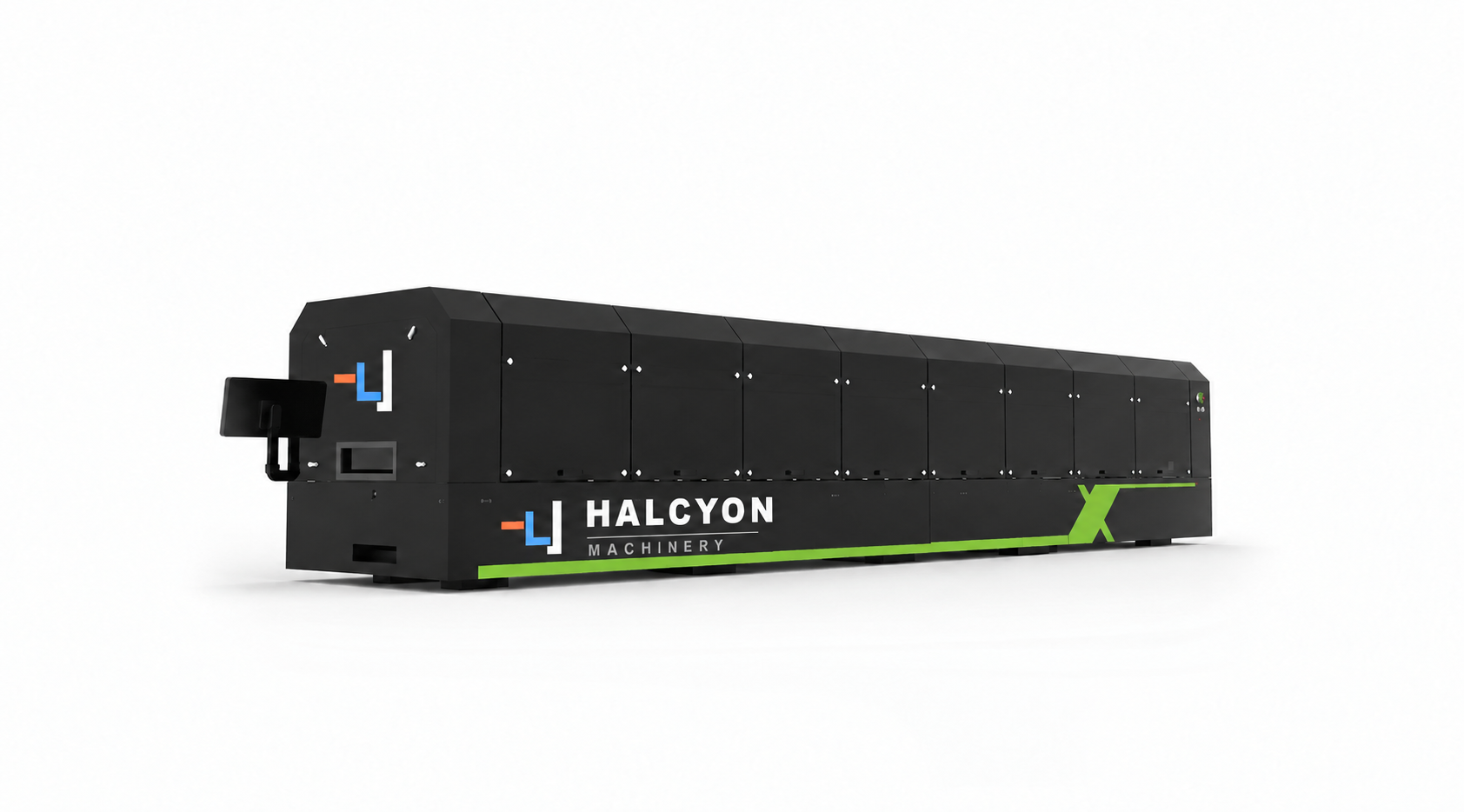
Reference configuration. Final machine follows the signed technical agreement.
The two pages describe different documented profile envelopes. Use the customer's drawings, not building height alone, to select a machine.
The published 3005 web envelope is 89–305 mm. The HSK-2000 is listed at 75–200 mm; an overlap in width does not make the punching and flange tooling interchangeable.
Supply both stud and track sections. Identify the required flange, return lip and material grade for each; ask for a written tool map before accepting a model recommendation.
For floor or truss members, select a real drawing with the highest hole density and longest specified length. Check formed geometry and every punched feature against that drawing.
Request a witnessed changeover between two approved C/U sections and compare the first acceptable parts. Throughput must be measured with the actual punching and handling sequence.
The production-base listing is a configuration reference, not acceptance evidence for every section or steel grade.
Flange dimensions require written confirmation: the listing describes C at 51 mm and U at 50–65 mm, while its metric table lists 41/51/61 mm. Supplier clarification is required; these are not interchangeable tooling guarantees.
Official model reference, checked 4 October 2026
Agree the test profile, steel and measurement method before the factory run. Our Xiamen production base's catalogue range is a starting point, not an acceptance certificate for your drawing.
We provide the current machine layout, component list, sample profile and test plan for the exact quotation.
Options are quoted only when they match the approved production workflow.
CSV or approved production-file workflow matched to the customer's design software.
Tool package selected for the required holes, notches, dimples, swages and connection details.
Single or dual-head marking for part ID, orientation and assembly information.
Powered decoiler, run-out support, sorting and AMR transfer options.
Interlocked guarding, monitoring and destination-standard electrical protection.
Operator, maintenance and production-data training included in the project scope.
The 3005 listing covers a broader upper web range. When all sections fall within 200 mm, compare the HSK-2000 tooling, material and trial scope before choosing either model. Building application alone does not prove the equipment choice.
No. Send separate C and U drawings showing web, flange, lip, steel grade, thickness, holes and lengths. Ask which approved tool set covers each section.
When all required webs fit its documented 75–200 mm range, compare the actual punching features, materials, changeover and test scope rather than selecting by model number alone.
Use an agreed test member with the real hole pattern and length. Record first-off dimensions, rejected parts, changeover time and sustained acceptable output; catalogue forming speed alone is not finished-part output.
Model-range sources: HSK-2000 model page and HSK-3005 model page. Published supplier specifications require confirmation in the project quotation.
We will confirm the suitable model, process route, line modules and the values that can be guaranteed for your material.