
Cable Tray Roll Forming Machine
Compare tray, ladder, trunking and cover drawings; confirm forming, punching and joining scope for each part.
Price range: cable tray roll forming lines
US$65,000–98,000 (standard) · US$111,000–169,000 (premium), FOB China
Standard covers the first two configuration levels (single-profile and multi-profile / quick-change); premium covers fully automatic lines.
Final price depends on profile, thickness, speed, punching and automation. Excludes freight, import duties and installation. Send your profile drawing for a quotation within 24 hours. North American configurations (480V/60Hz, UL and local requirements) are quoted separately.
Large complete lines (e.g. truck chassis beam lines or full cable tray lines) are quoted per project, typically above US$150,000.
Manufactured in our Xiamen factory · 35+ years of roll forming experience.
Get a quote for this machine
Send your profile drawing or a photo of the profile. We reply within 24 hours with a configuration and price.
Commercial terms
- Lead time
- standard machines 30–60 days; automatic and heavy-duty lines 60–120 days (confirmed in the quotation).
- Warranty
- 12 months on the machine, lifetime technical support by video and remote guidance; wear parts excluded.
- Payment
- 30% deposit; 70% before shipment, after you approve the trial-run video.
- Shipping
- FOB Xiamen, China.
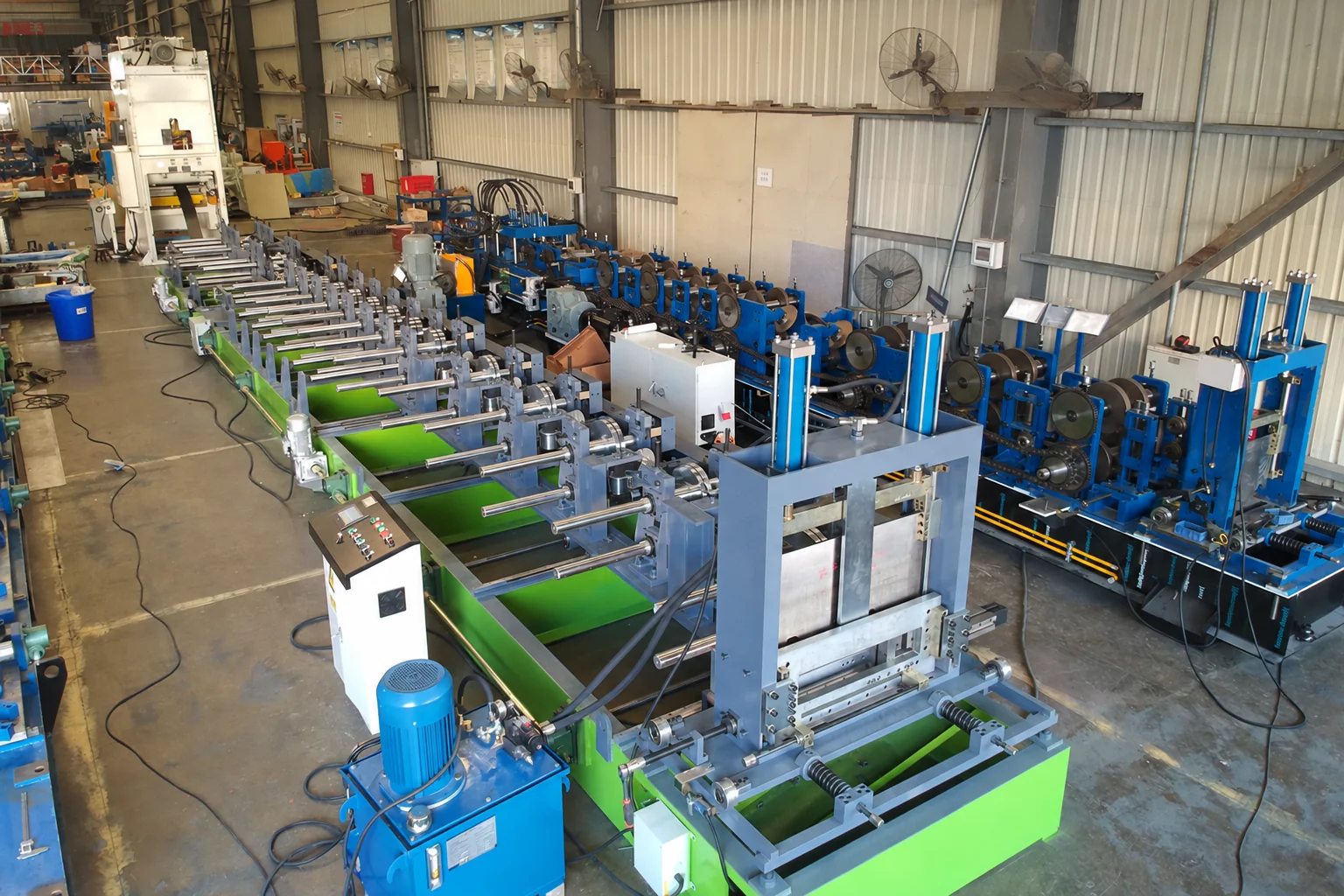
Can one line make trays, ladders and covers?
Direct answer: Do not assume those products share one tool set. A tray, ladder component, trunking section and cover can need different forming, punching and joining operations. Send one drawing per part, then confirm the proposed line's actual tool sets, hole-pattern control, cut method and changeover scope with our factory team.
- Profile inputtray or cover cross-section, width, lip and joint details
- Material inputgrade, coating, thickness range and coil width
- Punching inputslot and hole geometry, pitch, reference edge and unpunched zones
- Trial evidencemeasure section and holes, test lid/connector fit, inspect burrs and coating
Which evidence belongs to the tray design?
Electrical installation and load suitability cannot be inferred from machine speed or a product photo. The buyer should supply the applicable tray standard, support span, load criteria and corrosion environment; the responsible designer must validate the finished system. Compare the sheet line only when the part is actually a cladding profile rather than cable containment.
What can a published HCT-600 example establish?
Our Xiamen production base's published HCT-600 model page identifies a dedicated C/U cable-tray line, rather than a universal line for trays, ladder components and covers. The published example lists bottom widths of 100–600 mm, web heights of 50–100 mm and material thickness of 1.0–1.5 mm. Its listed 15 m/min is a forming-line speed, not a guaranteed finished-tray output after punching, cutting, changeover or handling.
These figures describe our Xiamen production base's published HCT-600 example, accessed 29 September 2026. They are not a quotation or guaranteed specification for your project. Before choosing a configuration, ask us to confirm the exact profile drawing, material and coating, slot layout, tool sets, changeover method and accepted sample for the proposed machine.
Send us your profile drawing
We will review your profile drawing, material, hole pattern and target output with our factory team before confirming the proposed scope and quotation.
Get a quoteVerify the tray and its mating parts
Use labeled samples of each approved tray, cover or ladder component. Record section dimensions, perforation and slot locations, edge burrs, coating condition and connector fit. A machine trial does not establish the installed cable-support system's load or electrical suitability.
Send tray and hole drawingsScope to confirm
- Separate tool sets for each part
- Perforation and slot datum
- Cover and connector fit
- Changeover and scrap handling
- Factory trial sample list
Can a tray and a ladder use one roll set?
Do not assume it. Ask our factory team to compare the approved sections and identify each forming, punching and assembly operation.
What proves the hole pattern?
Measure repeat samples from a named drawing revision using an agreed datum and tolerance; include the unpunched zones and mating hardware.
Does a formed sample prove cable-load capacity?
No. The responsible designer must evaluate the finished cable-support system, spans, connections and applicable requirements separately.
For a focused procurement review, read How Should Buyers Trial Cable Tray Slot and Splice Fit?. For the full line from decoiler to stacking, read what a cable tray making machine line includes.
What determines a cable tray machine price?
A cable tray machine price is comparable only when the approved parts, coil material and included operations are the same. A forming-section offer cannot be compared directly with a complete line that includes coil handling, punching, cutting and collection. Halcyon reviews the proposed scope with our factory team; this page does not provide a fixed price or delivery commitment. If your production mix includes both solid-bottom and perforated trays, review the solid-versus-perforated cable tray punching-scope guide before comparing offers. It separates the forming section, punching tools, no-punch mode and changeover trials.
- List each tray, cover, trunking or ladder-component drawing separately. Identify the included roll sets, punch tools, connectors or joining operations and the changeovers needed; a single product name does not establish shared tooling.
- Specify steel grade, coating, thickness, coil dimensions, cut lengths and hole pattern. Compare the decoiler, feeding, punching, forming, cutting, scrap handling and output handling included in each offer.
- State the trial material, named part samples, section and hole measurements, burr and coating inspection, and cover or connector fit checks. Finished-system load suitability remains a separate design assessment.
- Separate the equipment subtotal from packing, freight, destination import costs and locally supplied services. Request currency, quotation validity, delivery basis, training, spare parts and exclusions in writing. These are quotation fields to confirm, not costs or terms promised here.
Send the part drawings, material and production mix for a scope-matched quotation. Request a technical quotation.