
By Halcyon Machinery · Reviewed
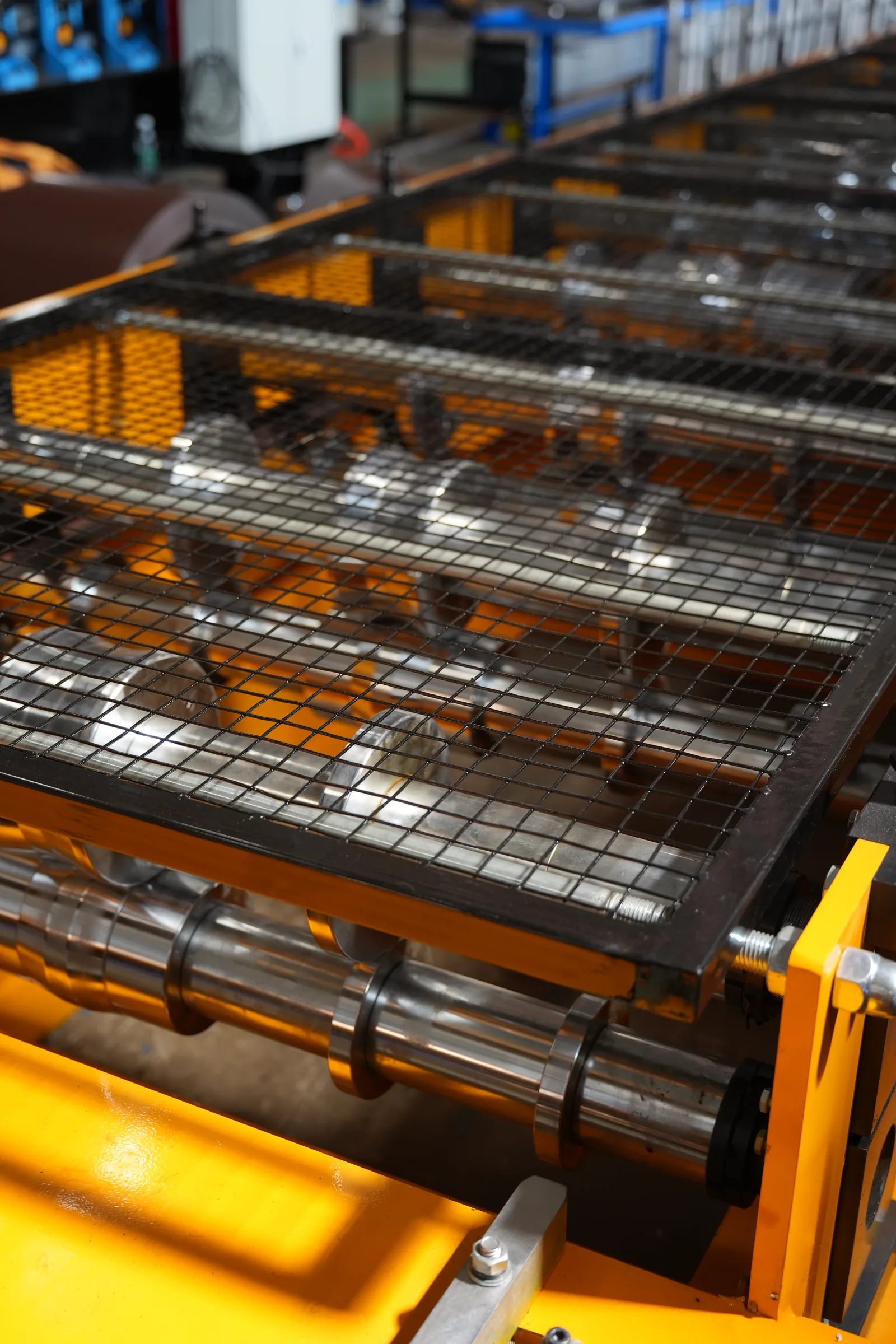
A machine photograph can show a guard, but it cannot prove access control throughout the production, setup and maintenance cycle. Use this buyer checklist to request evidence for the exact line in the quotation.
Direct buyer answer
Ask the supplier to identify every accessible in-running nip point, rotating drive, punching and cut-off area on the proposed layout, then show the guard design and a witnessed functional review for each operating mode. Keep the drawing revision, trial material, operator-access route and test record together. A mesh panel alone does not show what happens when an access door opens, when a line is jogged for setup, or when energy is isolated for servicing.
Separate a visible cover from a verified safeguard
OSHA identifies in-running nip points as a principal roll-forming hazard and says safeguarding must fit the machine design and work method. For a US installation, its machine-guarding standard addresses point-of-operation, nip-point and rotating-part hazards. That US requirement is not a worldwide certificate for a particular machine. Ask the supplier and your local safety specialist to review the destination-country rules and the actual configuration.
| Area or mode | Evidence to request with the quote | What a photo cannot establish |
|---|---|---|
| Coil entry and forming passes | Hazard/access drawing, guard boundaries, material-feed method and the agreed trial sequence | Whether a hand can reach an in-running nip point from every access side |
| Drive and transmission | Included covers, service-access method and the order-specific component layout | Whether all rotating parts are protected after installation |
| Punch and cut-off stations | Guard and access description for the ordered punching layout and cut-off method | Whether an opening or adjustment creates a reachable hazard |
| Setup, fault clearing and maintenance | Permitted operating modes, energy-isolation points, written procedure and responsible-person handover | That an emergency-stop button is an energy-isolating device |
Specify the trial, not a generic safety claim
- Send the revision-controlled profile drawing and identify where strip entry, forming, punching, cutting and exit handling occur.
- State the steel grade and thickness range and the representative coil planned for the witnessed run; changes in feed and handling can change the access task.
- Provide the punching layout, or state that punching is excluded, so the quoted guard and access scope matches the actual modules.
- State the target output and required setup or changeover modes. Ask for an operating-mode demonstration, guard/access observations, identified sample pieces and recorded open issues; do not infer a safe configuration from headline line speed.
For servicing, OSHA's hazardous-energy rule addresses unexpected startup and stored energy in its US scope. A stop push-button is not, by itself, an energy-isolating device. The site operator must develop the applicable procedure for the installed equipment; the supplier should provide the relevant isolation and maintenance information for the actual line.
Buyer questions
Does a mesh guard prove that a roll-forming line is compliant?
No. The photograph cannot prove the boundary, reach distance, fastening, interlock function, operating modes or local regulatory status. Review the actual design and witnessed tests with a competent local specialist.
Does an emergency stop replace guards or isolation?
No. A stop control addresses a different function from preventing access to moving parts or isolating energy for servicing. Require the proposed design and procedure for each task.
What should remain open until the order-specific design is known?
Guard locations, access and maintenance routes, control functions, destination-country requirements and test methods. A catalogue photo or another model's declaration cannot settle those items.
Sources, review and enquiry
Reviewed by Halcyon Machinery on 27 September 2026 for procurement discussion. Sources: OSHA's roll-forming safeguarding guidance, 29 CFR 1910.212 and 29 CFR 1910.147. The OSHA guide is advisory; the cited US rules have jurisdictional limits. This page is a buyer evidence checklist, not a safety assessment, certificate or statement that any pictured equipment has passed inspection.
Use the factory-acceptance evidence guide to keep the complete trial record. Compare the automatic C/Z purlin line or roof-sheet line against your profile and material. Send the drawing, steel grade, thickness range, punching layout and target output for a configuration-specific proposal.