
By Halcyon Machinery · Published and reviewed
What should a roll forming straightness trial establish?
Agree the finished length, inspection reference, support arrangement, material, measurement method and acceptance limits before the trial. Record straightness and twist separately from cross-section dimensions and cut length. A short section sample or a smooth-running video cannot establish the geometry of the full-length parts you intend to produce.
Halcyon Machinery reviews equipment requirements with our factory team. This guide helps buyers specify evidence for a proposed line; it is not a measured capability statement for an unidentified machine. The accepted drawing and written trial agreement determine the required results.
Separate the geometry terms in your drawing
A profile can curve along its length and also rotate around its longitudinal axis. It may meet a web or flange dimension at one section while still being unsuitable for the intended assembly. Describe each characteristic against a named datum and orientation rather than writing only “straight.”
| Characteristic | State in the trial agreement | Evidence to keep |
|---|---|---|
| Longitudinal bow or sweep | Reference face or edge, direction, assessed length and support condition. | Location and magnitude of deviation, method and sample identity. |
| Twist | Reference section or face, orientation, assessed length and method of expressing rotation. | Measurements at agreed locations, with units and end orientation. |
| Cross-section dimensions | Web, flange, lip, angles and drawing datums. | Separate section measurements; these do not replace full-length geometry. |
| Cut length and ends | Length reference and how burrs or damaged ends are treated. | Length results and end-condition observations recorded separately. |
Terminology varies between drawings and markets. For US purchasers, keep inch-based drawing requirements separate from any metric instrument record. For UK and Australian purchasers using metric drawings, retain millimetres and the stated assessed length throughout the worksheet. Do not silently convert a total deviation into a “per metre” figure: the approved method must specify what that figure means.
Use the actual finished length and a documented support arrangement
Request full-length trial pieces for the lengths relevant to your order. Identify where supports contact the profile, which face is upward, whether restraints are used and when measurements take place. A profile resting freely and the same profile held by a fixture are different inspection conditions. An assembly fixture may be useful for a separate fit check, but it should not hide the condition being assessed.
For a project needing several lengths, agree which combinations must be demonstrated. A short coupon establishes only the measurements taken on that coupon. It does not prove the behaviour of a longer finished member. Define the number and selection of samples in the purchase agreement instead of relying on a single favourable piece.
Keep machine setup evidence separate from acceptance evidence
Roll-Kraft's tooling guidance identifies entry-guide alignment, tooling pressure and roll matching among possible contributors to twist. That is useful diagnostic context. It does not diagnose an unseen line or supply a universal acceptance limit. Adjustment and maintenance should follow the actual equipment documentation and be performed by qualified personnel.
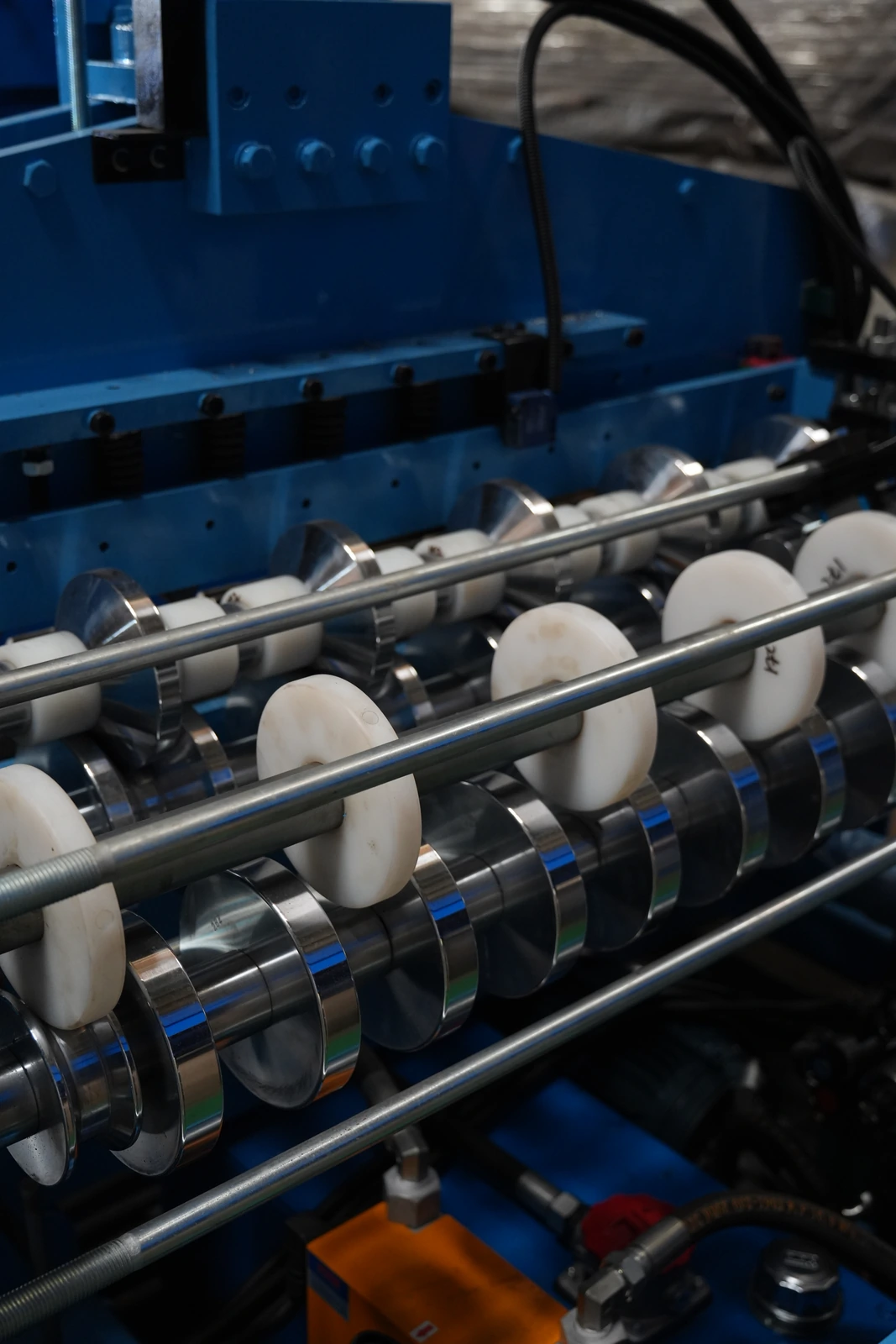
Ask the supplier to identify the material and setup used for each accepted sample. Keep the drawing revision, strip identity, thickness definition, tooling configuration and relevant settings with the measured results. If an adjustment is made between samples, record the change rather than mixing the results into one unqualified “passed” claim.
Who decides the allowable deviation?
The buyer's approved drawing, product specification and intended assembly requirements should be agreed with the supplier. Samson Roll Form's tolerance guidance is a manufacturer's reference for its roll-formed products. Its published limits are not automatically the contractual limits for Halcyon equipment, a different section or your building project.
State both the limit and the method. Specify the instrument, reference setup, measurement locations, reporting units and how ambiguous results will be resolved. If a supplier offers a capability value without these conditions, ask for the conditions and supporting records before comparing quotations. A structural designer remains responsible for the project's engineering requirements; this procurement guide does not establish structural capacity.
Compare a trial report, rather than two photographs
- Identify the proposed line configuration and the exact trial material.
- Match each sample to the approved drawing and required finished length.
- Record the reference, orientation and supports used for inspection.
- Report bow, sweep, twist, section dimensions and cut length as separate results.
- List failures, adjustments and repeat measurements without overwriting the original observations.
- Agree outstanding actions and any repeat-trial conditions before acceptance.
For example, two suppliers may describe parts as “straight,” but one reports a full-length measurement and the other shows a short clamped coupon. Those records are not directly comparable. Request comparable conditions; do not infer superiority from the appearance of the photograph. This is a hypothetical comparison, not a Halcyon customer case.
Download the blank profile geometry acceptance record. Record sample identity, length, supports, reference and measurements. This blank worksheet is not a tolerance specification or completed trial evidence.
Questions buyers ask
Does an accurate cut length prove that the profile is straight?
No. Length and full-length geometry are separate characteristics. Record both against their agreed references and methods.
Can a running-line video prove low twist?
A video can show production and handling context. Acceptance needs identified finished samples and measurements under agreed conditions.
Can I use another manufacturer's published tolerance table?
It can inform questions, but it is not your supplier's guarantee. Confirm applicability, method and contractual limits for the actual section and material.
Choose the equipment and send the inspection requirements
Start with the roll forming equipment overview or the C/Z purlin selection guide. Use the long-profile runout support guide for the handling arrangement, and the cut-length acceptance guide for the separate length requirement.
Send the profile drawing, steel grade, thickness range, required lengths, punching layout and target output. Include the datums and geometry checks that matter to your assembly so they can be discussed with our factory team.
Discuss the line and trial requirements
Sources above provide supplier-specific technical context. The procurement checklist is Halcyon's editorial recommendation. Reviewed in English on 3 October 2026; no external technical certification or completed customer trial is claimed.