
By Halcyon Machinery · Technical content review · Published
Direct answer
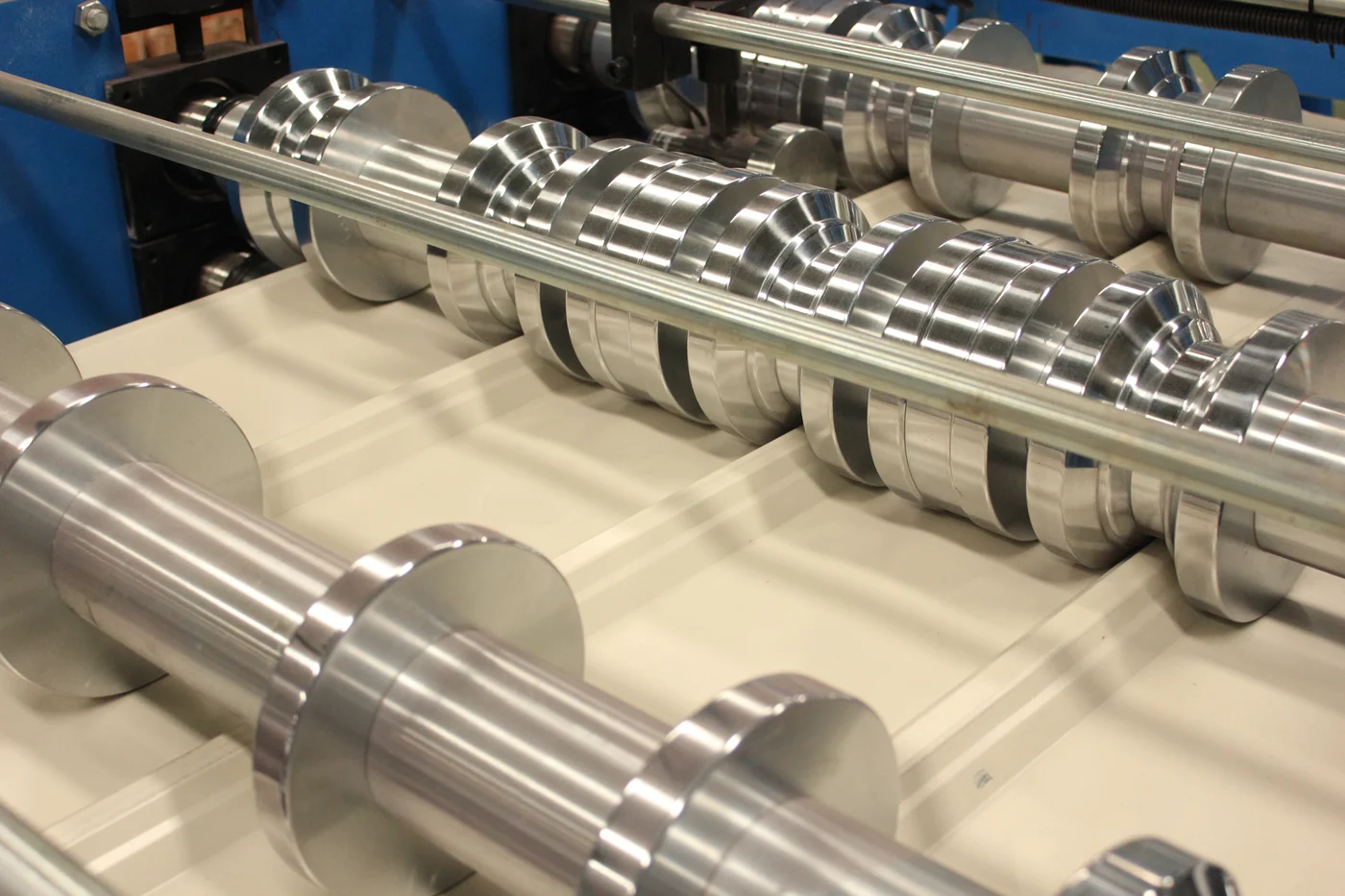
A roof sheet roll forming machine should not be assumed to produce both a rounded corrugated profile and a trapezoidal rib profile with one set of rolls. If your production plan needs both, send a dimensioned drawing for each sheet and ask which tools, machine stations, cutting method and changeover procedure are included. Accept the proposed scope only after separately identified trial sheets have been measured against both drawings.
Define the two products before discussing the machine
For the corrugated sheet, mark the wave shape, pitch, depth, edge geometry and intended lap direction. For the trapezoidal sheet, mark rib height, pitch, flat widths and the two lap edges. Record each drawing revision. A market name such as “corrugated iron” or “trapezoidal roofing” does not define the tooling dimensions. The buyer should also state the steel or aluminium grade, coating, base-metal thickness range, incoming coil width, cut-length schedule and target accepted output for each product.
The corrugated machine page focuses on the rounded-wave sheet. The trapezoidal machine page covers ribbed trapezoidal geometry. These are distinct product-drawing routes; neither page by itself is a promise that the other profile is included. Our Xiamen production base publishes a corrugated forming-line example and a separate roof and wall panel line example. Their catalogue photos and specifications are references, not a shared-tooling approval for a Halcyon order.
Compare the actual tooling proposal
| Buyer question | Evidence to request |
|---|---|
| One profile or two? | List each approved section drawing and the exact included roll-tool sets or independently configured layers. |
| How is changeover done? | Request the written procedure, tools and setup checks; identify what must be adjusted or replaced. |
| What happens at cutting? | Confirm the blade or die arrangement for each cross-section and witness the cut ends. |
| Which coil is tested? | Record grade, coating, thickness and coil width for each separately labeled trial. |
| How are panels accepted? | Measure geometry, finish, cut length and effective cover from adjacent sheets of each profile. |
A double-layer arrangement can be proposed for two named panel profiles, but its inclusion cannot be inferred from a machine's appearance. Each layer still needs a documented drawing, tooling range, material route and sample. If a seller proposes changeable tooling on one frame instead, obtain the changeover scope and its repeat trial after the second setup. Do not compare a single-profile quotation with a two-profile quotation as though they contain the same equipment.
Use accepted panels, not a catalogue photograph, to decide
Witness a sample from each approved profile and label it with the drawing revision, coil identity, machine setup and production time. Check the wave or rib dimensions at agreed points and inspect the coated surface and cut ends. Lay two panels together in the intended overlap direction, then measure installed effective cover rather than relying only on the overall panel width. The cover-width and side-lap trial guide gives a separate recording method. A successful machine trial proves the identified formed sheets under those trial conditions; it does not by itself certify the installed roof's water resistance, wind resistance or structural design.
What to send for a comparable quotation
Send both section drawings, the roof application, steel grade, coating and thickness range, coil width, cut lengths, planned production mix, target accepted output and available factory space. State any punching, protective-film, stacker or handling requirements separately rather than assuming they are standard. Ask Halcyon to review the package with our factory team and identify included and excluded tools, the trial material and the acceptance method. A speed, power, price or delivery promise only makes sense after that configuration is defined.
Questions buyers ask
Can one set of rollers form both corrugated and trapezoidal roof sheets?
Do not assume it can. Ask the supplier to identify the tooling and trial samples for each approved section drawing; the same machine frame does not prove the same rollers form both profiles.
Does a double-layer machine automatically include both profiles?
No. The quotation must name each layer's approved profile, material range, tooling, cutting arrangement and separately measured trial sheets.
What measurement matters beyond the panel's overall width?
Measure the installed effective cover with adjacent trial sheets joined in the specified lap direction, as well as the rib or wave geometry and cut length.
Next step
Send both drawings and your material and output requirements. We will review which roof-sheet equipment scope and separate trial evidence can be proposed with our factory team.
Sources and limits: Halcyon Machinery technical content review, 1 October 2026. Production-base examples: our roof and wall line and our corrugated line. These illustrate machine families, not the current quotation's configuration or verified output. A Portuguese buyer version addresses the same purchase question for Portuguese readers.