
Sandwich Panel Roll Forming Machine or Complete Line?
Separate metal-skin roll forming from core processing, bonding, cutting and trial acceptance before selecting a sandwich-panel line.
What does “sandwich panel roll forming machine” include?
Specify the finished panel system and the production modules separately. The external and internal skins, core handling, bonding or foaming, conveying, cutting and testing are distinct work packages. A skin roll former alone does not prove that a complete insulated-panel line can make a specified fire-rated, thermal or cleanroom product.
What must the proposal identify?
Start with approved skin-profile drawings, steel grade and coating, skin thickness range, panel width and thickness requirements, core type, joint geometry, cut lengths and target output. State whether the scope includes one or two skin formers, core processing, adhesive or foam system, laminating/curing, conveying, cutting, controls and handling. For an existing plant, mark new versus retained modules and their interfaces. Specific core processes have different safety and quality requirements; do not assume one configuration fits EPS, PU/PIR, mineral wool and cleanroom systems.
What does a named EPS line example show?
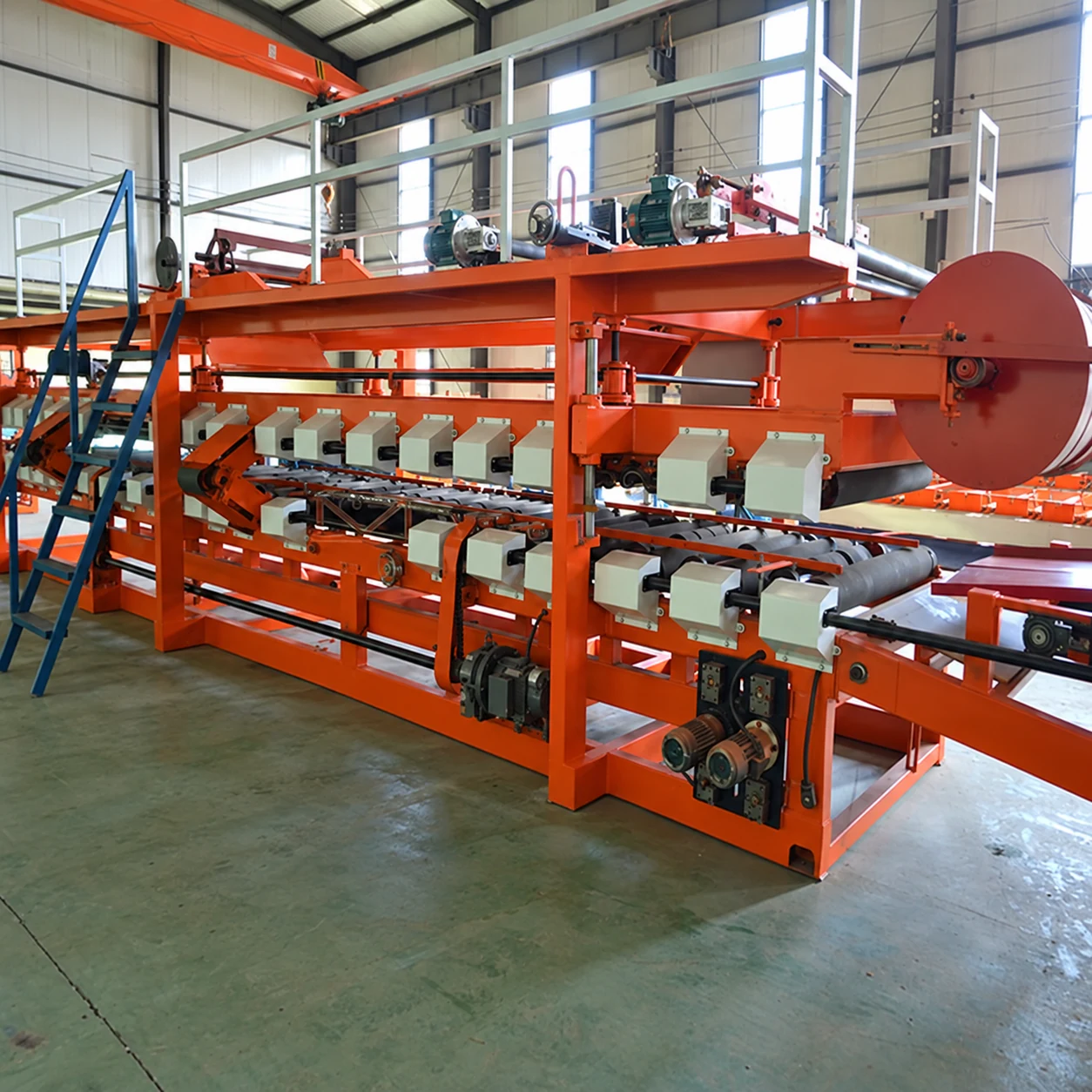
Our Xiamen production base publishes an EPS sandwich-panel manufacturing line example with core handling and downstream panel processing. It supports asking where the metal skins are formed, how the EPS core enters and bonds, and which conveying, cutting and handling stages are in the quoted scope. The source page also discusses other core types, but its example photograph and mixed catalogue figures do not establish that one supplied line handles EPS, PU/PIR and mineral wool interchangeably. Request one current flow diagram and a trial plan for the selected core and joint before accepting any configuration or output claim.
Trial and evidence
- Identify the material and core batch used in the trial and retain the approved drawing revision.
- Record skin geometry and panel joint fit on labeled first-off and later samples.
- Review visible bonding, surface condition, cut edge and panel dimensions against the agreed acceptance method.
- Keep system performance claims separate: fire, thermal, acoustic, cleanroom and structural performance require applicable testing or project evidence.
Questions buyers ask
Is a skin roll former the same as a complete sandwich-panel line?
No. The scope depends on the core process, bonding or foaming, conveying, cutting and controls included in the offer.
Can one photograph prove fire or thermal performance?
No. Those properties require the applicable tested panel construction and documented results; appearance is insufficient.
What information should I send?
Send skin-profile drawings, steel grade and coating, thickness range, joint and core specification, panel dimensions, punching layout if any, cut lengths, target output and destination requirements.
Explore sheet-forming equipment, then send the panel and skin drawings for a production-base proposal.
Source and limits: Halcyon Machinery buyer-review framework, updated 2 October 2026; equipment example and edited photograph from our Xiamen production base above. This page does not claim verified numerical performance.
Define your panel line scopePlan a documented bonding trial
For a bonded-core proposal, use the sandwich-panel line bonding trial guide to agree material identities, measured conditions, sample records and acceptance responsibilities. Download its blank trial sheet; finished-panel appearance alone does not prove bond strength.