
By Halcyon Machinery · Technical content review · Published
Direct buyer answer
Compare a dedicated door-frame roll forming line when the same approved sections and hardware schedule recur in production. Compare a sheet-metal bending route when profiles or fold sequences vary and the proposed machine can actually form the drawing. Neither machine alone proves a finished frame: define blanking, holes, notches, corner joining and inspection, then ask for measured trial parts from each proposed route.
Start with one controlled frame package
Send the buyer-approved head, jamb and transom drawings, material grade and thickness, coating or finish, cut lengths, tolerances and drawing revision. Include handing, hinge and strike positions, fixing holes, corner preparation, joining method and the finished-frame inspection plan. A profile sketch alone leaves too many operations unspecified. If the door set has a fire, acoustic or security requirement, give the supplier the relevant approved system documents; do not infer compliance from a machine name.
The production decision depends on the actual mix: how many section families, lengths, handed variants and hardware patterns will run, and how often each changes. Record expected accepted pieces per batch, not just nominal line speed. A fixed forming tool may suit a stable repeated profile, while an adjustable bending sequence may suit a changing set of fold geometries. Those are screening hypotheses to test with your drawings, material and proposed tooling, not universal cost rules.
What each route must include
| Buyer question | Dedicated roll forming route | Bending route |
|---|---|---|
| Section geometry | Confirm the exact head and jamb profiles, tooling set and changeover method. | Confirm tool reach, bend sequence, minimum returns and whether the section can be handled without interference. |
| Blank and length | State coil, leveling, cutting and waste scope, with accepted cut-length tolerance. | State sheet blank size, any slit or shear operation, bend length and positioning scope. |
| Hardware preparation | List which hinge, strike, fixing and service holes or notches are in-line. | List separate punching, laser, notching or manual processes; do not assume the bender makes holes. |
| Corner and assembly | Show the corner detail, joining operation and square-frame inspection after forming. | Show the same detail and inspection after bending; forming a section is not assembling a frame. |
| Change in product mix | Time and record a real tool or recipe change, including first accepted piece. | Time and record a real program or tool change, including first accepted piece. |
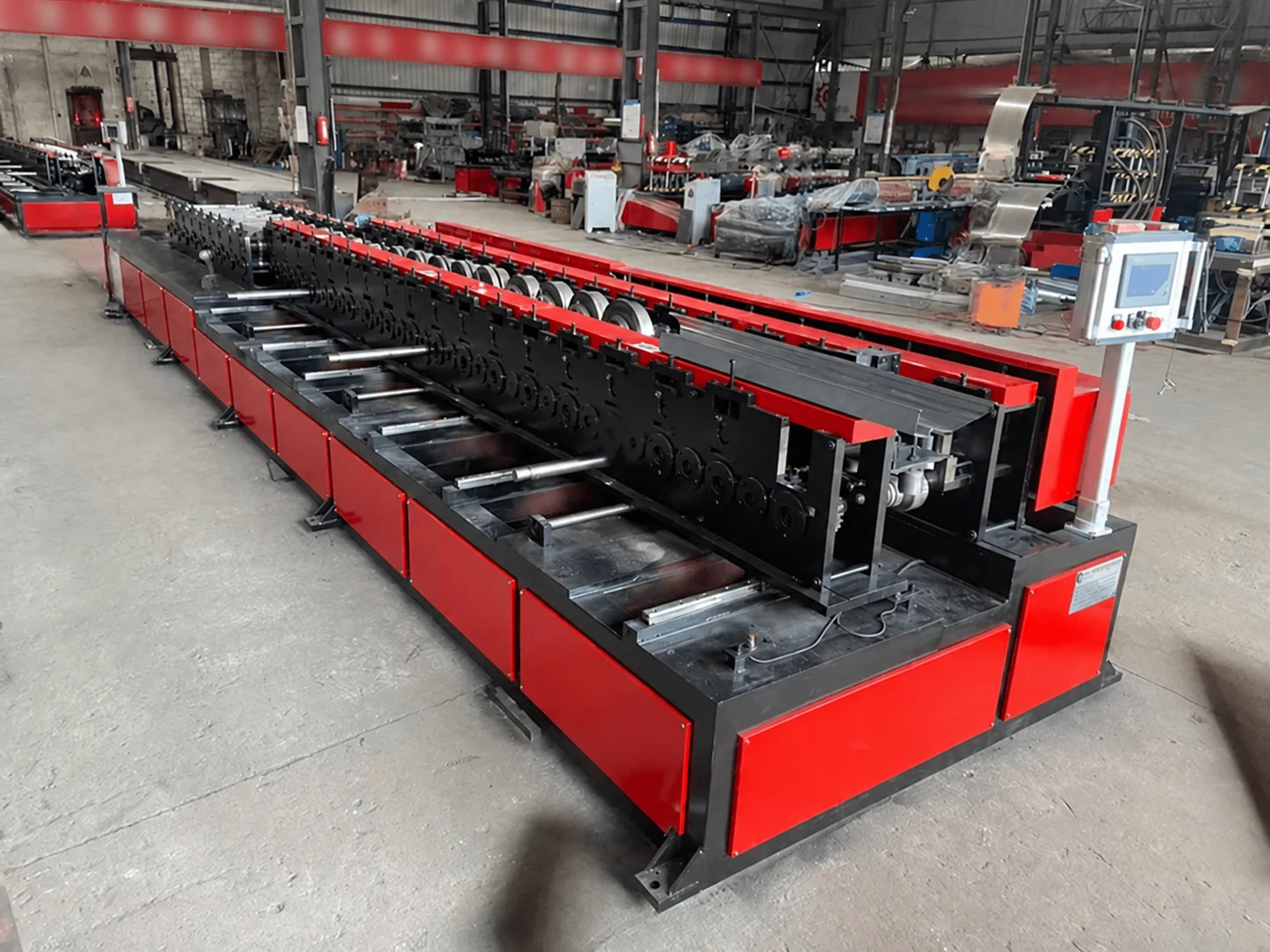
our Xiamen production base's door and window frame line illustrates a possible sequence of decoiling, leveling, pre-punching, forming, notching, cutting and unloading. It is one catalogue configuration; the quotation for your frame must say which stations are included. HFB-6500 bending/folding reference is described for long roofing, wall and trim sheet-metal parts. It illustrates a bending alternative, but that page alone does not establish that the HFB-6500 can make a particular door frame. Validate tool clearance, part handling, hole preparation and a physical sample before treating it as an equivalent route.
Request two comparable trial records
For either route, identify the coil or sheet batch and drawing revision, then measure web and return dimensions, bend angles, overall length, hole locations and notches from agreed datums. Assemble a head and two jambs using the intended corner method, and check squareness, gap, handedness and hardware fit. Retain photographs and the actual labelled sample pieces. Record setup scrap, rework and the first accepted part after a real changeover. A polished line video or one attractive section cannot substitute for that evidence.
Ask each supplier for a scope matrix covering the machine, tooling, separate processes, guards, controls, training, spare parts, utilities and acceptance criteria. Cost comparison should include the whole route and the buyer's production plan. The door-frame roll forming machine page describes process options, while the sheet-metal bending equipment page describes our bending reference. For an actual frame sample inspection, use our hardware and corner trial checklist.
Questions buyers ask
Is a bending machine always cheaper for a new door-frame business?
No. Compare the complete route, including blank preparation, bends, hardware holes, notches, joining, labor and rejected trial pieces. A machine price alone does not establish total production cost.
Can a door-frame roll former make every frame drawing?
No. The forming tools, cut lengths, corner method, handing and any punch or notch stations must be checked against each approved drawing and then tested on samples.
Does a formed steel frame automatically qualify as a fire-rated frame?
No. Fire performance belongs to a tested and approved door-set system, including frame, leaf, hardware, seals and installation. The machine photograph or section shape does not prove that rating.
Send the drawings for a route review
Send the approved frame and hardware drawings, material and thickness, expected batch mix, target accepted output, changeover frequency and required test evidence. Halcyon will discuss the process scope with our factory team and identify what a machine-specific trial must prove. Request a configuration review.
Sources and limits: Our Xiamen production base's door/window frame roll forming line; HFB-6500 bending/folding machine; Halcyon door-frame sample trial guide. Reviewed 2 October 2026. Catalogue examples are not an offer of identical tooling, output, certification or commercial terms. Confirm the proposed machine and route against a witnessed sample of the buyer's approved frame.
Compare door-frame production routes