
By Halcyon Machinery · Updated
For roof and wall panels, compare a single forming level with a proposed double-level arrangement using the two actual panel drawings. Separately assess C/Z purlin changeover machines: producing C and Z sections does not by itself mean the machine has two stacked forming levels.
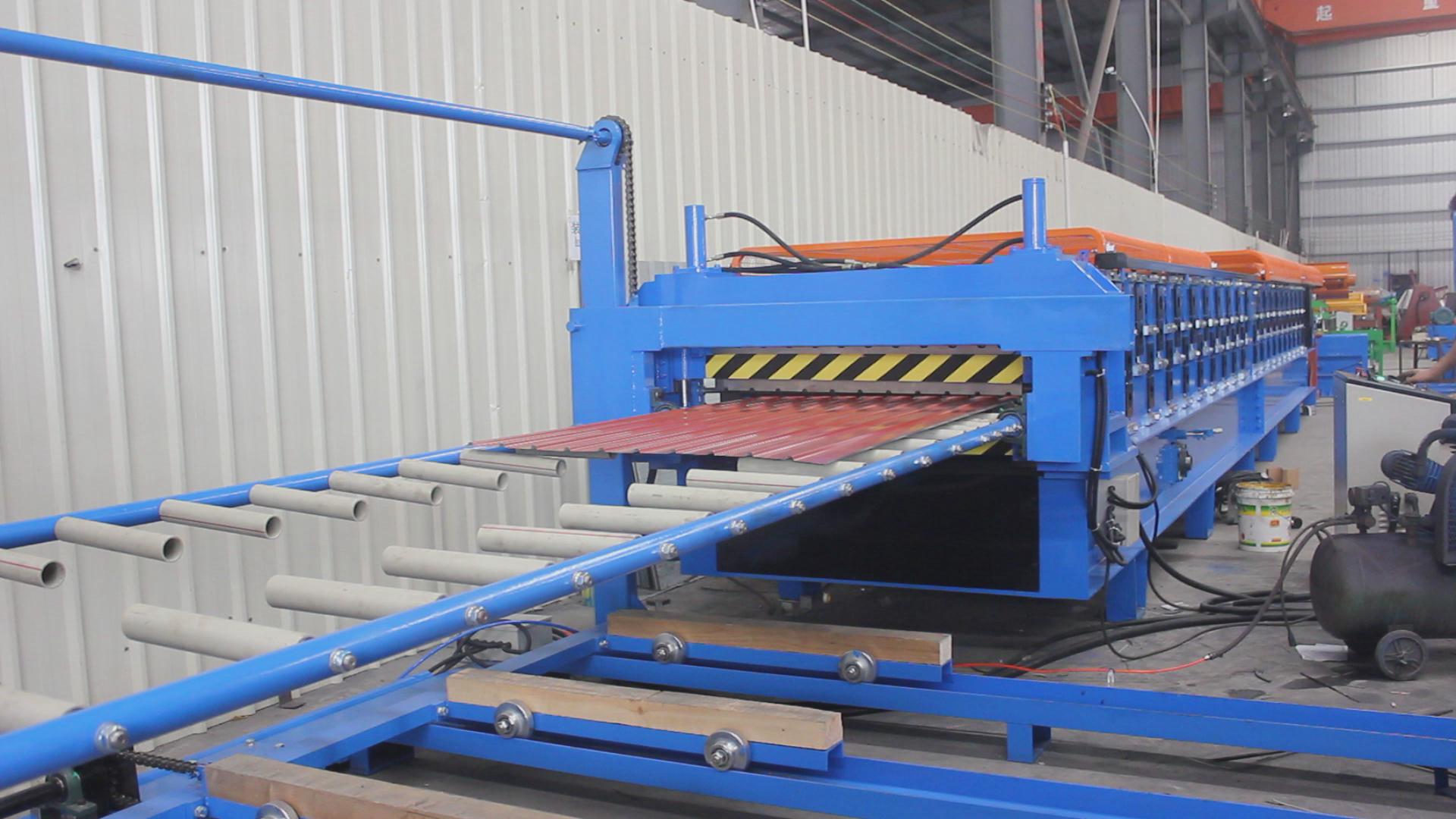
Compare your order schedule, not only the number of profiles
List the monthly demand and typical batch size for each panel. Ask whether the proposed levels share drives, cutting, controls or run-out equipment, and whether they can operate independently. Do not assume two forming levels provide two simultaneous production streams. A compact arrangement may suit alternating batches; two independent lines may better suit concurrent orders. The relevant comparison is completed orders, including switching and inspection time, against available floor space and the quoted configuration.
Buyer review worksheet
| Review item | Information to compare | Decision or evidence |
|---|---|---|
| Product scope | One required panel drawing | Two drawings approved for the proposed arrangement |
| Production schedule | Long runs of the same section | Alternating batches and switching losses |
| Shared equipment | Identify the complete line scope | Confirm drive, shear and handling dependencies |
| Access | Operator and service clearance | Access to both forming levels |
| Future demand | Cost of an additional line | Limits of the existing tooling and controls |
Does changing profile always require replacing rollers?
It depends on the machine design. A fixed panel tool set, an adjustable purlin line and a cassette-change arrangement have different changeover methods. Ask for a demonstrated sequence between your two drawings, including the first-piece inspection, rather than a general promise of quick changeover.
Is a double-layer roofing machine the same as an automatic C/Z purlin machine?
No. A double-layer roofing arrangement uses two forming levels for specified cladding profiles; an automatic C/Z purlin line changes between approved structural section configurations. Halcyon lists its double-layer machine under roof and wall cladding, separately from the automatic C/Z purlin platform. A machine that makes two profile shapes is not necessarily a double-layer machine.
Apply the answer to your order
Illustrative purchasing situation: a buyer needs corrugated and trapezoidal sheets, while another needs C and Z members for steel buildings. These requests should start with different equipment families. For either request, confirm the two drawings and the switching sequence before deciding how much equipment can be shared.
Evidence to request
- Both finished-product drawings and their applications.
- Identification of shared drive, shear, controls and run-out equipment.
- Whether independent or simultaneous production is actually included.
Supporting references: Review the double-layer roll forming machine selection page for shared-equipment scope and sample checks, then compare the wider roof and wall machine family. These references provide context; order-specific performance and scope still require written confirmation.
Download the editable buyer worksheet (.txt) · Link to this answer
Prepare the next technical discussion
Use this worksheet to mark confirmed information and unresolved items. Attach the latest section drawing, material specification and production requirement so the discussion concerns your actual parts. See the roll forming machine quotation checklist for the complete inquiry package.
Review the relevant equipment or send your requirements · Browse more buyer guides
Discuss your production requirement