
By Halcyon Machinery · Published and reviewed
Direct answer: approve the finished route, not just the flat sample
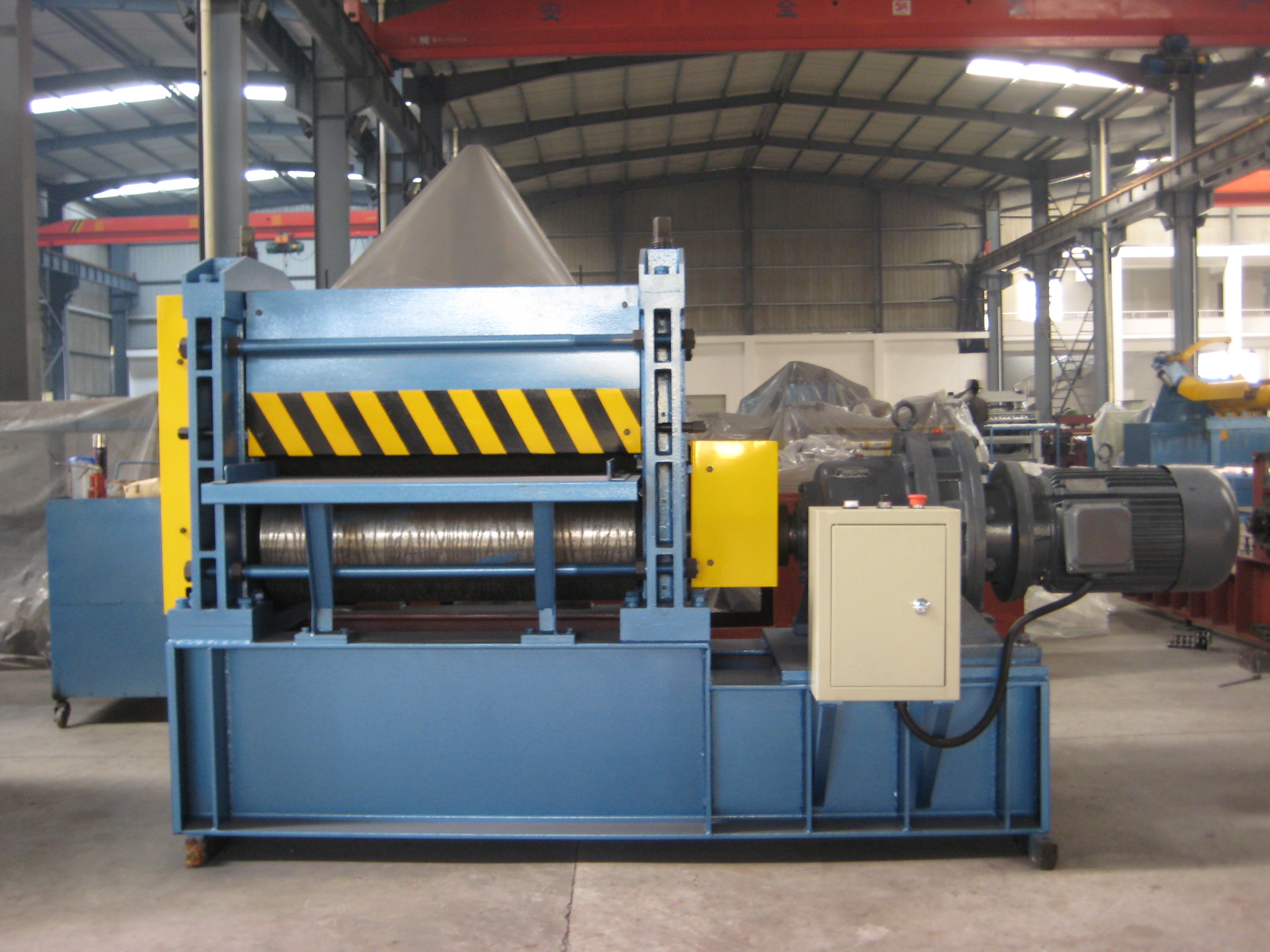
When buying a metal embossing machine for a panel that will later be roll formed, request linked samples from the incoming material, the embossed flat strip and the finished profile. Define where the texture must remain visible, which direction it runs and how its relief will be inspected. A convincing flat sample does not establish the appearance of the finished rib, bend or joint. Agree the material, tooling sequence and acceptance method before the trial; do not use a photograph as a substitute for those samples.
Turn a texture name into an inspectable requirement
A request for a “stucco” or “woodgrain” finish leaves important questions open. Supply an approved reference sample, its identification and photographs under agreed lighting. Mark the viewing face and rolling direction. Define the pattern repeat, the usable textured width and any untextured margins. Specify whether orientation matters after the sheet becomes a door skin, wall panel or another approved profile.
AZZ Precoat Metals lists both directional and non-directional stucco among its embossing options. That is evidence that pattern terminology can distinguish orientation, not evidence that Halcyon offers those particular designs. Confirm the actual engraved-roll drawing and sample with the proposed supplier. Keep dimensional acceptance and visual acceptance as separate entries.
Identify three stages from the same trial material
- Incoming material: retain an identified flat reference and record the coil or sheet batch, steel grade, thickness specification, coating system and viewing face. Note marks already present.
- After embossing: retain a flat sample with its roll-set identity, process setting reference and position in the run. Inspect the pattern before attributing a defect to the downstream former.
- After forming and release: inspect the finished profile at defined locations, including the viewing flats and relevant rib or bend regions. Record how it was supported and which earlier sample it corresponds to.
Use traceable adjacent lengths or pieces from the same identified batch; cutting out a sample can prevent that exact piece from completing the production route. Record this relationship rather than claiming that unrelated samples represent one piece. Include an initial sample and a repeat sample after the agreed run, with changeover samples when relevant to the purchase.
Choose measurement locations before measuring relief
Ask the supplier and your quality team to agree a suitable relief measurement method for the actual texture and sheet geometry. Identify the reference surface, measurement direction and sample support. A reading across a formed rib combines profile shape with surface texture unless the method separates them. Do not compare that reading directly with a flat-sheet depth measurement taken using a different reference.
Define representative inspection zones on a drawing. Record the measured locations and instrument or inspection method, not only a single average. Compare like locations under the agreed method; retain photographs for appearance comparison without treating camera shadows as calibrated depth evidence. Set the permitted difference using the approved end-product requirements and a validated method. This guide supplies no universal embossing-depth tolerance.
| Question | Evidence to request | Separate decision |
|---|---|---|
| Is the intended pattern made? | Identified roll set, approved reference and flat embossed sample | Pattern design and orientation |
| Does it survive the next operation? | Linked flat and formed samples, agreed inspection zones | Relief and appearance after forming |
| Is the final profile correct? | Released-part dimensions against the section drawing | Geometry and joint fit |
| Is the coating acceptable? | Incoming and processed finish records plus specified tests | Coating condition under the agreed scope |
Keep coating condition and process order visible
The National Coil Coating Association explains that prepainted-metal forming depends on the substrate and coating combination, tooling clearance and equipment alignment. Apply that as a reason to test your identified material and tooling, not as a blanket promise that every embossed coating will remain intact. Examine the viewing face for changes at the agreed stages and ask the coating supplier which tests apply to the final use.
Document whether embossing happens before the profile former, within a proposed line or in a separate operation. Record guide, forming and handling contacts that affect the viewing face. Do not assume that an alternative sequence is possible on the same machine. The prepainted-panel surface-protection guide addresses handling and finish checks; those checks complement this pattern-retention trial.
Use a blank record, then request a configuration
Download the blank pattern-retention trial record (CSV). It contains headers only: no invented test results or preset pass limits. Link each decision to a sample, approved criterion and inspection method. If the route changes, identify the new trial and preserve the earlier result rather than overwriting it.
Halcyon Machinery prepares equipment proposals directly with our factory team. Send the pattern reference, final section drawing, material specification, textured width, intended route and agreed acceptance needs through our equipment enquiry page. Start with the metal embossing machine product page; confirm which embossing and downstream operations are included in the actual proposal.
Frequently asked questions
Can I accept an embossing machine from a flat sheet alone?
A flat sample can answer a flat embossing requirement. If your approved product will be formed afterwards, include that operation in the agreed acceptance scope and inspect the resulting profile.
Does a deeper embossed pattern mean a stronger panel?
This appearance trial does not establish structural capacity, slip resistance or a floor-deck design rating. Those require their own applicable engineering and test evidence. Decorative texture must not be treated as verified structural deck embossing.
Should I increase pressure when the texture changes after forming?
Do not infer an operating adjustment from the final appearance alone. Compare the recorded stages and ask the equipment supplier to assess the actual material and route within its approved setup instructions, then repeat the relevant acceptance checks.
Sources and review boundary
Reviewed 4 October 2026. Our Xiamen production base's official embossing equipment and photograph supports equipment-category context; its listed parameters are not universal Halcyon specifications. AZZ embossing options supports orientation terminology only. NCCA prepainted-metal forming guidance supports material and tooling considerations. The staged trial record is a procurement framework, not a completed test, published standard or certification.