
By Halcyon Machinery · Updated
If you are comparing roof panel curving machines, judge each offer by the curve measured on the panel after it leaves the tooling, using a drawing datum, support condition and method you agreed in advance. The radius on the control screen is a setup value, and elastic recovery can make the finished curve differ from it. Record material, machine settings and measured geometry separately for every trial panel so the suppliers' results can be compared like for like.
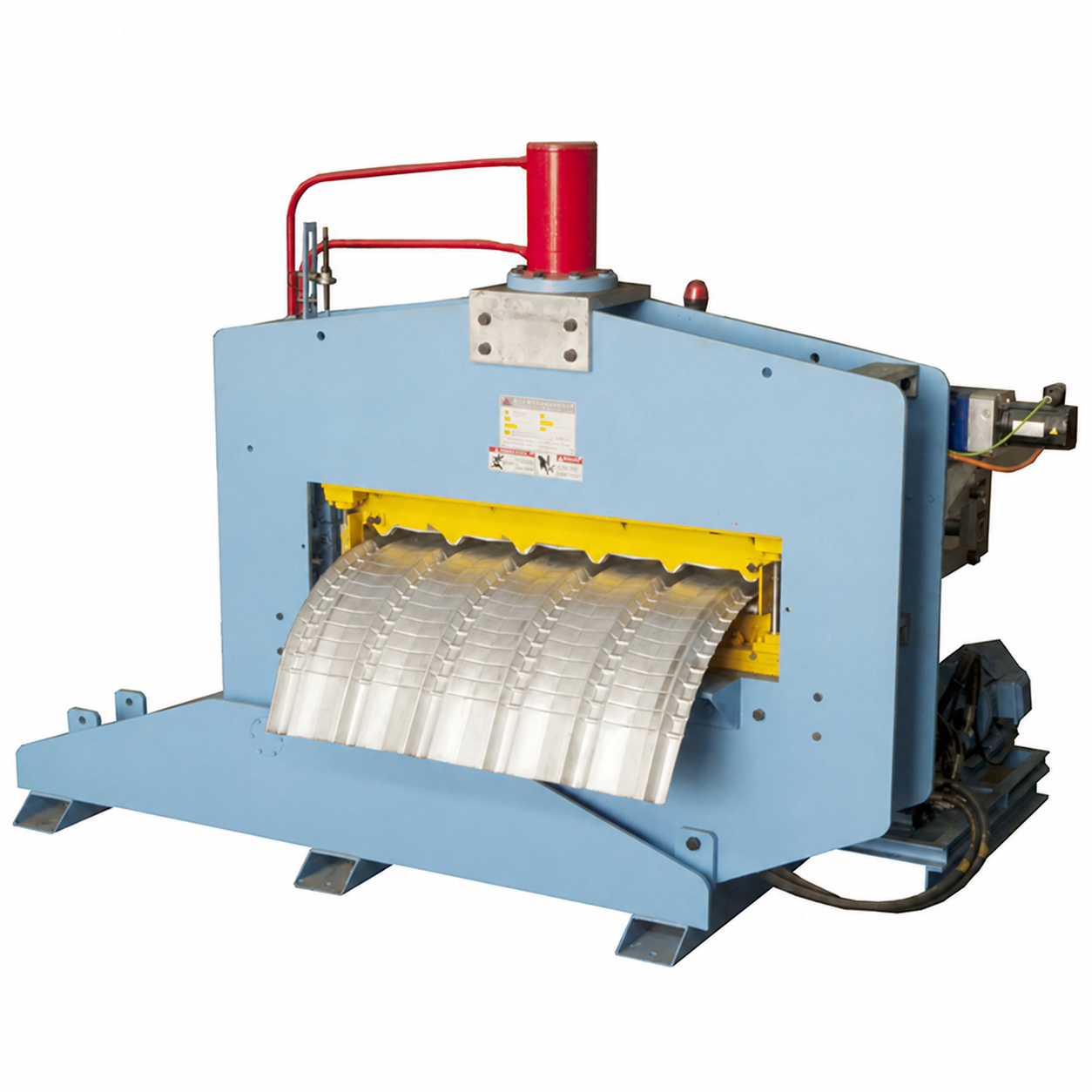
Fix the reference curve on the drawing
A profiled roof sheet has ribs, valleys and different surfaces, so ask the project designer to name the longitudinal reference line or surface that defines the curve, plus the intended arc, critical end positions and acceptance limits. Without that, two suppliers can quote different measurements as the same radius. If the drawing combines straight portions, several radii or transitions, agree measurement locations for each portion and each transition instead of one overall reading.
Settle when and how the panel is measured
Define the timing of measurement, how the panel is supported, its orientation and any restraint used; a panel forced into a template and an unrestrained panel are different inspection conditions. Agree a template, coordinate measurement, survey method or other documented procedure, with reference points, instruments, limitations and acceptance criteria written down. Do not estimate radius from an oblique photograph, and do not prescribe a universal compensation percentage: assess material, profile and process in the actual trial.
A chord-and-rise calculation can estimate a circular arc only when the measured points lie on the same circular reference curve. For rib shape, variable curvature or a non-circular profile, use the drawing-defined geometry. Record any assembly-fit checks separately from the released-shape measurement.
Record sheet for each trial panel
| Trial record | Information to retain |
|---|---|
| Identity | Panel ID, drawing revision, coil or batch identity, material and coating, thickness and formed profile. |
| Setup | Quoted machine and tooling identity, settings, curving direction, adjustment and run sequence. |
| Measurement condition | Reference datum, sample orientation, supports or restraint, timing and instrument. |
| Finished geometry | Drawing-defined readings and limits, end positions and any transition checks. |
| Profile condition | Rib deformation, crimp appearance where intended, edges and visible coating damage. |
| Repeatability | First-off and later sample IDs, original readings, failures, adjustments and repeat results. |
Download the blank curvature trial record (CSV). It has the headings above; add your drawing-defined readings and limits to suit the agreed method.
Inspect ribs, crimps and repeat samples
Compare critical rib dimensions and the visible surface with the approved profile. For a crimped panel, agree the crimp arrangement and appearance; if the design calls for a smooth arc, ask the supplier to demonstrate the proposed smooth-curving process rather than accepting a crimped sample whose outline looks similar.
Agree a sampling plan covering the sections and materials in the quotation. Keep first-off and later results, mark samples made after adjustments, and if a sample fails, keep its result, the corrective action and the repeat trial. Repeatability across the quoted range needs more than one selected panel.
Buyer questions
Is the radius on the control screen the finished radius?
It is a setup value unless the machine-specific documentation states otherwise. Measure the released panel using the agreed reference and method.
Can one overall radius approve a panel with changing curvature?
No. Check the portions and transitions identified in the drawing; a single circular-arc result cannot describe a variable curve.
What should I send for a quotation?
Send the straight profile drawing, required curved geometry and datum, material and coating, thickness range, panel lengths, target accepted output and trial requirements. State whether visible crimps are intended.
Related equipment and next step
Compare the roof panel curving equipment scope and the upstream roof sheet forming line, and use the cover-width and lap trial guide for sheet-joint questions. Send your profile and curvature drawing for configuration review and we will agree the profile, method, tolerances and acceptance procedure for your project with our factory team.
The pictured example and curving method come from our Xiamen production base's published auto-crimping machine listing; this page is Halcyon's buyer-review framework, its catalogue figures are not adopted as our offer, and a measured curve does not cover structural capacity, wind resistance, watertightness or building-code compliance.